
In 2026, video inspection of pipes remains an essential tool for professionals in sanitation, industry, and network management. Faced with aging infrastructure, increased safety requirements, and a constant search for operational efficiency, inspection cameras are the most reliable solution for diagnosing the internal condition of networks without invasive work.
However, the range of technology available has expanded considerably in recent years. Choosing the right model is no longer straightforward and requires a detailed analysis of requirements, field constraints, and uses. In 2026, choosing the right pipe camera will be a real driver of performance and profitability.
The challenges of video pipe inspection in 2026
Sewage, water, and industrial networks are subject to multiple constraints: corrosion, deposits, cracks, roots, subsidence, or obstructions.Visual inspection allows these anomalies to be detected accurately, without resorting to heavy or destructive interventions.
By 2026, operators' expectations have changed. It is no longer just a question of viewing a pipe, but of obtaining a reliable, rapid, and actionable diagnosis, while ensuring operator safety. Confined spaces remain hazardous environments, which reinforces the appeal of robotic technologies and high-performance ITV systems.
There are also economic considerations. An unsuitable camera leads to wasted time, incomplete inspections, and sometimes misinterpretations. Conversely, well-chosen equipment improves the efficiency of interventions, limits unnecessary travel, and optimizes the planning of maintenance or rehabilitation work.
Criteria for choosing an inspection camera suited to your needs
The choice of a sewer camera is based on several essential technical criteria.
The diameter of the pipes
Not all cameras are designed to inspect the same diameters. Domestic networks, urban collectors, and industrial pipes have very different cross-sections. It is therefore essential to choose equipment that can adapt to the target diameter range without compromising image quality or mobility.
The length and configuration of the network
The length to be inspected directly influences the type of transmission. Wired systems remain common, but have limitations in terms of range and maneuverability. Wireless solutions are gaining ground, particularly in complex or difficult-to-access networks.
Image and lighting quality
A high-resolution camera, combined with powerful lighting, is essential for accurately identifying cracks, joint defects, or early signs of corrosion. By 2026, professionals expect images that can be used immediately, without any loss of detail.
Robustness and reliability
Inspection cameras operate in demanding environments: humidity, sludge, shocks, chemicals. The durability of the equipment is a key factor in ensuring a return on investment.
Safety and ergonomics
A system that is simple to deploy, easy to clean, and limits human intervention in confined spaces directly contributes to team safety.
Which models to choose in 2026 based on your usage
In 2026, several categories of solutions coexist on the market.
Wired push cameras remain suitable for simple linear inspections over limited distances. They offer an economical solution for occasional or domestic use, but quickly reveal their limitations on complex networks.
Motorized ITV carts remain useful for large diameters and standardized inspections, particularly in the context of structural networks. However, they are more cumbersome and costly to use.
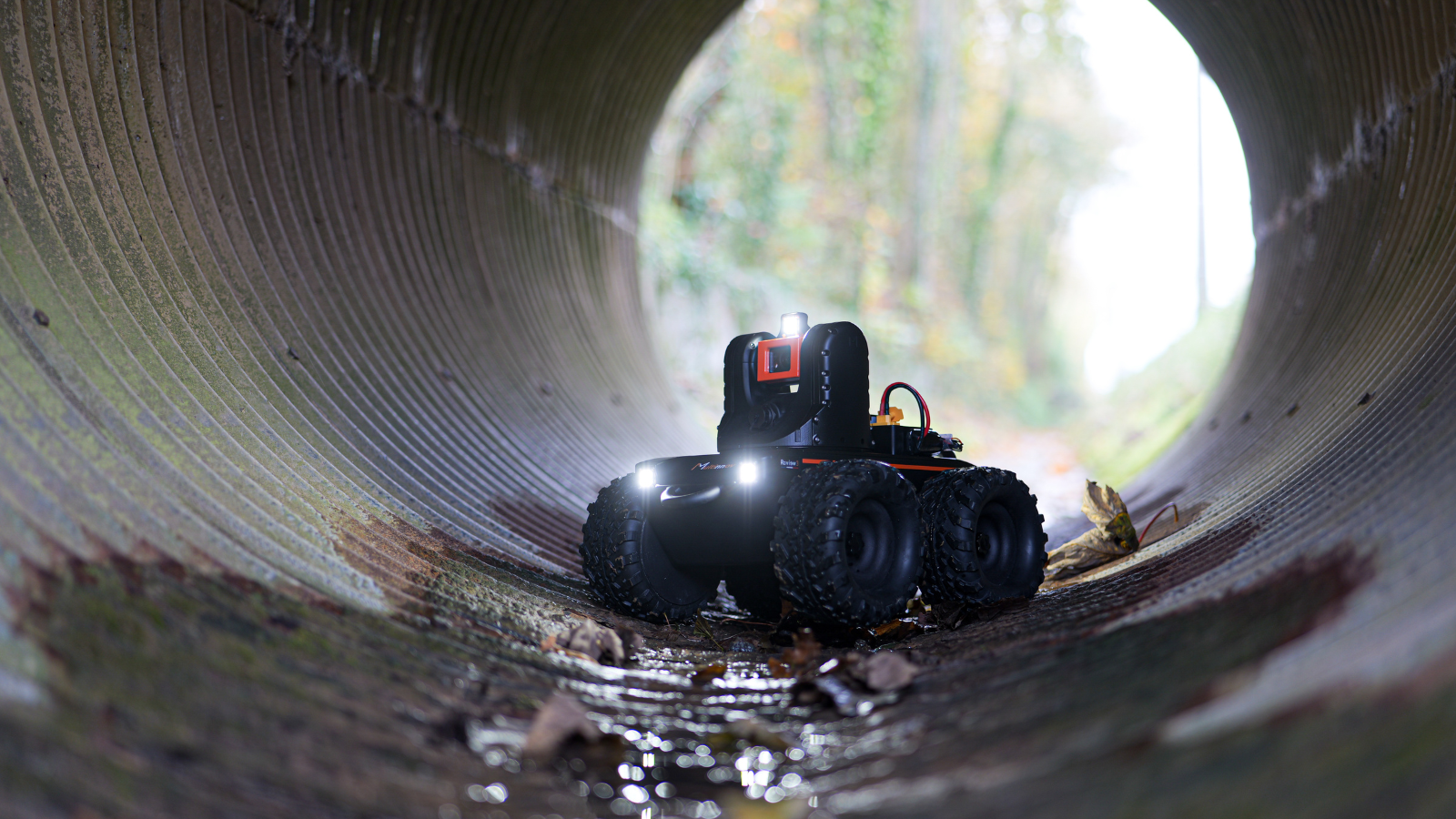
Compact, wireless inspection robots represent one of the major developments in the sector. The Roview3, developed by Multinnov, perfectly illustrates this trend. Designed for visual inspection of pipes and confined spaces, it stands out for its mobility, wireless operation, and rapid deployment.
Thanks to its wireless transmission and range extender, the Roview3 allows networks to be inspected over long distances without the need for cable pulling. This technology improves inspection efficiency while reducing operator fatigue. Its robust design and image quality make it a solution particularly suited to professional use in 2026, where flexibility, safety, and economy have become priorities.
In 2026, choosing a pipe camera is no longer simply a question of budget. It is a strategic choice that directly impacts the quality of diagnostics, the safety of interventions, and the profitability of operations.
Faced with the diversity of networks and changing requirements in the field, professionals must prioritize reliable solutions that are tailored to their uses and capable of meeting the challenges of confined environments. Innovations driven by players such as Multinnov, with equipment such as the Roview3, perfectly illustrate the transition towards more efficient, safer, and more economical inspection.
Investing in the right model today means ensuring accurate inspections, better network management, and sustainable long-term performance.