
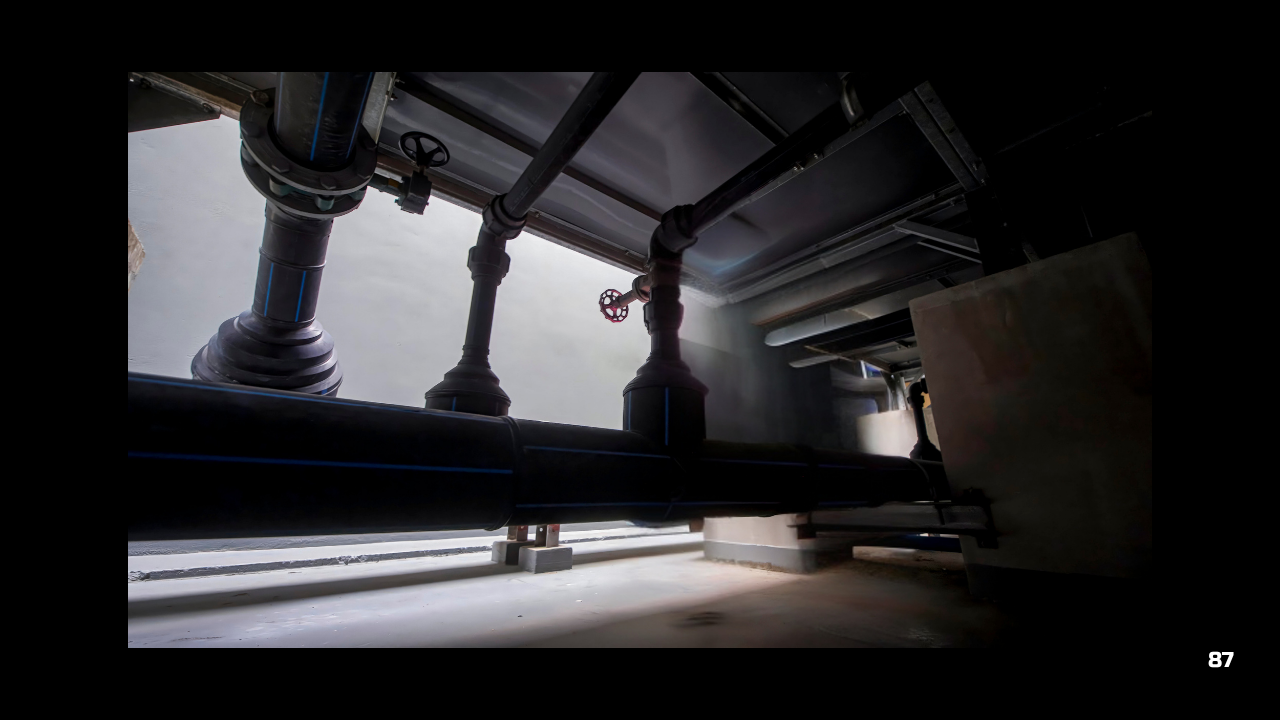
Inspecting industrial structures indoors presents numerous challenges. Tanks, reservoirs, utility tunnels, industrial chimneys, underground networks, and nuclear facilities are often difficult to access and expose operators to significant risks. In these complex environments, traditional inspection methods may require heavy equipment, prolonged operational shutdowns, or human intervention in confined spaces. Given these constraints, indoor drones are gradually establishing themselves as the go-to solution for conducting rapid, accurate, and safe visual inspections.
But not all drones are suited to the demands of the industry. So how do you choose equipment that can operate effectively in these specific environments?
Understanding the Challenges of Indoor Industrial Inspections
Unlike drones used outdoors, drones designed for industrial inspection must operate in environments where flight conditions are particularly challenging.
Confined environments often present several simultaneous constraints:
- No GPS signal;
- Low light;
- Presence of obstacles;
- Confined spaces;
- Metal surfaces or complex structures;
- Potentially hazardous atmospheres.
These conditions make piloting more challenging and require the use of specific technologies capable of ensuring reliable and safe navigation.
In certain sectors—such as nuclear power, energy, heavy industry, and wastewater systems—safety is also a major concern. Minimizing operators’ exposure to hard-to-reach areas is now a top priority for facility operators.
It is precisely in this context that the robotic visual inspection solutions developed by Multinnov come into their own. They make it possible to obtain actionable data without systematically relying on direct human intervention.
Key Criteria for Choosing an Indoor Drone
When choosing an indoor drone, you shouldn't limit your decision to the quality of its inspection camera alone. Several criteria must be considered to ensure effective and reliable inspections.
Flight Stability
Stability is one of the most important factors.
In a confined environment, there is little room for error. The drone must be able to maintain a precise flight path to facilitate the inspection of structures and the collection of usable images.
High-performance stabilization systems improve the quality of observations while making the pilot's job easier.
Navigation Systems
The frequent lack of GPS necessitates the use of alternative technologies.
The indoor drones best suited for industrial applications rely on various onboard sensors to navigate their surroundings and avoid obstacles.
This navigation aid significantly improves mission safety and reduces the risk of collisions in complex structures.
The quality of the sensors and the inspection camera
The primary objective of an ITV mission remains the collection of reliable visual data.
The quality of the inspection camera directly affects the accuracy of the diagnosis. A detailed image makes it easier to identify many defects:
- Corrosion;
- Cracks;
- Structural damage;
- Leaks;
- Deposits;
- Leaks.
The combination of appropriate sensors and high-quality visual feedback is a key factor in optimizing maintenance operations.
Impact resistance
Industrial environments often contain obstacles that are difficult to avoid.
An indoor drone designed for industrial use must be able to withstand occasional contact with walls or equipment within the structure being inspected.
This robustness helps ensure operational safety while reducing the risk of mission interruptions.
Autonomy and ease of deployment
Autonomy remains an important criterion, but it must be evaluated in light of the inspection’s actual needs.
Speed of implementation is often just as critical. Equipment that is easy to deploy helps reduce response times and improve operational efficiency in the field.
At Multinnov, the development of the indoor drone Stereo3 is a direct result of this approach: to offer a solution capable of operating quickly in complex spaces while ensuring a reliable visual inspection.
The Benefits and Applications of Indoor Drones in Industry
The growing use of inspection drones can be attributed to the many benefits they offer to infrastructure operators and manufacturers.
Enhanced safety
One of the main benefits is the protection of operators.
Inspections can be conducted remotely in confined or hazardous environments, thereby limiting human intervention in high-risk areas.
This approach helps reduce exposure to falls, hazardous environments, or the challenges associated with confined spaces.
More Effective Inspections
Drones provide quick access to hard-to-reach areas without the need to set up scaffolding or deploy significant logistical resources.
Inspection campaigns are thus completed more quickly, which makes it easier to plan maintenance operations.
A reduction in operating costs
Reducing access requirements, downtime, and human intervention helps generate significant cost savings.
The data collected also makes it possible to anticipate certain types of damage before they lead to more extensive repairs or business interruptions.
A wide range of applications
Today, indoor drones are used in many industries:
-
Industrial tanks and vessels;
- Industrial chimneys;
- Sewage systems;
- Technical galleries;
- Underground structures;
- Nuclear facilities;
- Energy infrastructure.
Depending on your needs, they can be supplemented by other specialized solutions, such as the inspection robot Roview3 developed by Multinnov for networks and pipelines.
Choosing an indoor drone for industrial inspection requires evaluating several key criteria: flight stability, navigation in GPS-free environments, the quality of the inspection camera, durability, and ease of deployment. These factors directly impact the quality of inspections and the safety of operations.
In light of the growing challenges of infrastructure maintenance, the technologies developed by Multinnov, such as the indoor drone Stereo3, are helping to transform inspection practices, making them safer, more efficient, and more precise. This evolution meets the current needs of manufacturers while preparing infrastructure for the demands of tomorrow.