
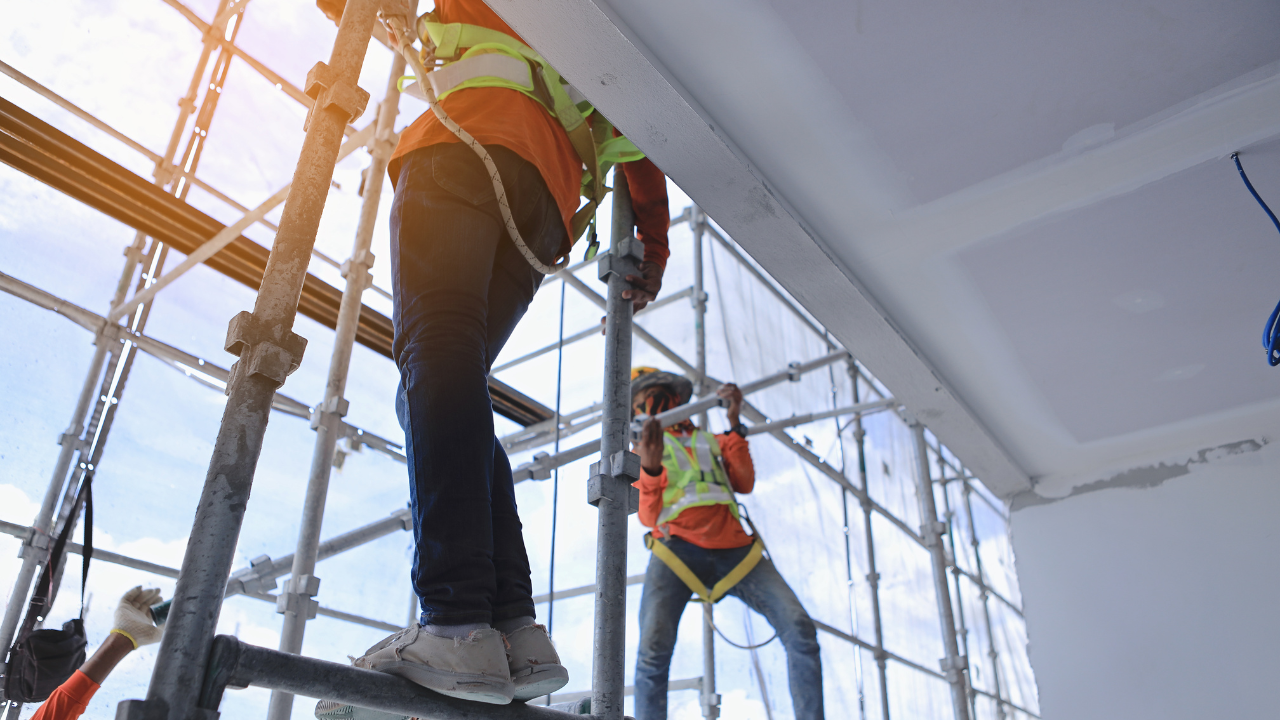
In industry, every inspection at height or in a hard-to-reach area requires careful planning. Erecting scaffolding, booking a cherry picker, mobilizing a specialized team, and securing the perimeter: these steps are necessary, but they take a heavy toll on schedules and budgets.
For operators, the question is therefore no longer simply how to inspect infrastructure. It has become: how can this be done faster, more reliably, and with fewer logistical resources?
This is precisely where inspection drones and robots offer a new solution. By enabling remote inspection of structures without direct human intervention in the most challenging areas, these technologies are gradually transforming industrial maintenance practices.
The Challenges of Traditional Logistics
Scaffolding, aerial work platforms, and lift platforms remain essential for certain physical tasks. Whenever repairs, replacements, or direct work on a structure are required, these tools remain indispensable.
But for a simple visual inspection, deploying them can be excessive.
The INRS reminds us that working at heights is a high-risk activity: falls from heights are the second leading cause of work-related fatalities after traffic accidents. In 2019, they also accounted for 11% of workplace accidents resulting in at least four days of lost time.
In addition to this human risk, there are significant organizational constraints:
- setup and takedown time;
- regulatory audits;
- deployment of trained personnel;
- partial closure of an area;
- coordination with maintenance and security teams.
Scaffolding, for example, must be erected, dismantled, or modified by trained workers under the supervision of a qualified person. It is also subject to specific inspection and usage requirements.
In other words, physical access to a high-altitude area is never a trivial matter. It generates direct costs, as well as indirect costs: production downtime, service delays, risk management, and administrative time.
In many cases, it therefore makes sense to separate these two phases: observe first, and intervene only if necessary.
Drones: A Flexible and Secure Solution
Inspection drones make it possible to carry out this initial observation phase with much less logistical overhead.
Equipped with an inspection camera, they can quickly access high places, complex spaces, or confined areas without setting up scaffolding or directly exposing operators to danger. The goal is not to replace all human intervention, but to reserve heavy equipment for situations where it is truly necessary.
In industry, there are numerous use cases:
- inspection of metal structures;
- inspection of roofs, silos, or tanks;
- inspection of industrial chimneys;
- visual inspection of confined spaces;
- pre-maintenance inspection;
- inspection of hard-to-reach equipment.
This approach makes it possible to quickly obtain usable images, videos, or data. Teams can then identify anomalies, assess the urgency of a response, and better prepare for future operations.
Multinnov is fully aligned with this approach. The company designs drones and robots dedicated tovideo inspection of complex and confined environments. Its solutions, such as the Stereo 3 and the Roview 3, are designed to ensure the reliability of facilities while enhancing operator safety. Multinnov notes in particular that drone- and robot-based video inspection can reduce the time required for preparations by a factor of 2 to 5 compared to traditional methods such as scaffolding.
The benefit is particularly clear when the inspection does not require immediate physical intervention. The drone then serves as a tool for sorting, diagnosis, and decision-making.
Realization of operational benefits
The benefits of drones is not limited to reducing the need for scaffolding. Their value lies primarily in the way they streamline the entire operational chain.
Reduce preparation costs
Less setup, less equipment to move, less time spent securing an area just for observation: logistics become simpler.
This allows maintenance teams to increase the frequency of preventive inspections without having to wait until a situation requires heavy-duty equipment.
Improving safety
By avoiding the routine deployment of personnel to work at heights or in hazardous environments, drones help reduce exposure to risk. This approach aligns with general safety principles: eliminate the risk whenever possible, or at the very least, limit exposure.
In industrial settings, this point is essential. Safety does not depend solely on protective equipment; it also depends on adopting safer operating procedures.
Speed up decision-making
A drone inspection provides a quick visual assessment. The images collected can be shared among maintenance, operations, security, and technical management departments.
The result: decisions are made more quickly and are better informed.
The data collected also helps to:
- prioritizing tasks;
- scheduling of stops;
- the traceability of inspections;
- a comparison of a structure's condition over time.
Optimizing heavy-duty operations
The real benefit isn't always about removing scaffolding permanently. It often lies in deploying it at the right time and in the right place for a job that's already been planned.
In this way, drones enable more precise targeting of on-site operations. Teams can avoid unnecessary interventions, reduce uncertainty, and improve technical preparedness.
Reducing logistics costs does not mean eliminating all traditional access methods. In industry, scaffolding and aerial work platforms remain necessary whenever physical work needs to be performed.
On the other hand, when it comes to inspection, diagnostics, and reconnaissance, drones are a game-changer. They enable rapid access to difficult-to-reach areas, minimize human exposure, and collect accurate data without requiring extensive logistical support.
With itsvisual inspection solutions designed for industrial environments and confined spaces, Multinnov helps operators improve safety, efficiency, and cost savings. A more agile approach that transforms inspection into a true tool for operational optimization.