Pipe inspection is an essential step in ensuring the reliability of sewer systems, underground infrastructure, and industrial pipelines. Cracks, blockages, leaks, buildup, or structural defects can quickly lead to costly malfunctions if not detected in time.
For a long time, these inspections relied on wired methods or equipment that was cumbersome to set up. While these solutions remain useful in certain situations, they reach their limits when networks are complex, damp, partially filled, or difficult to access.
With the Roview3, Multinnov offers a new approach to pipeline inspection: a wireless video inspection robot designed to improve mobility, safety, and diagnostic quality.
The Challenges of Inspecting Traditional Pipelines
Inspecting a pipe often means working in an invisible, confined, and unpredictable environment. Underground networks can be long, cluttered, damp, or partially submerged. Under these conditions, obtaining a reliable view of the pipe’s internal condition is never easy.
Traditional methods sometimes involve significant constraints:
- bulky cables;
- complex deployment logistics;
- limited mobility on certain networks;
- difficulty inspecting wet or uneven areas;
- longer procedure for the operators.
Added to this is the issue of safety. Sewer pipes and systems are often located in confined spaces, where direct human intervention can expose technicians to risks such as oxygen deprivation, gases, sludge, stagnant water, or difficult access.
The goal of a modern inspection is therefore clear: to obtain an accurate diagnosis without unnecessarily exposing crews to risk and without overusing technical resources.
That is the whole point of roboticvisual inspection. It allows you to view the inside of pipes, identify anomalies, and document findings without causing any damage. The shift to wireless solutions further reinforces this approach by offering greater flexibility in the field.
Roview3: Wireless Innovation for Accurate and Safe Inspections
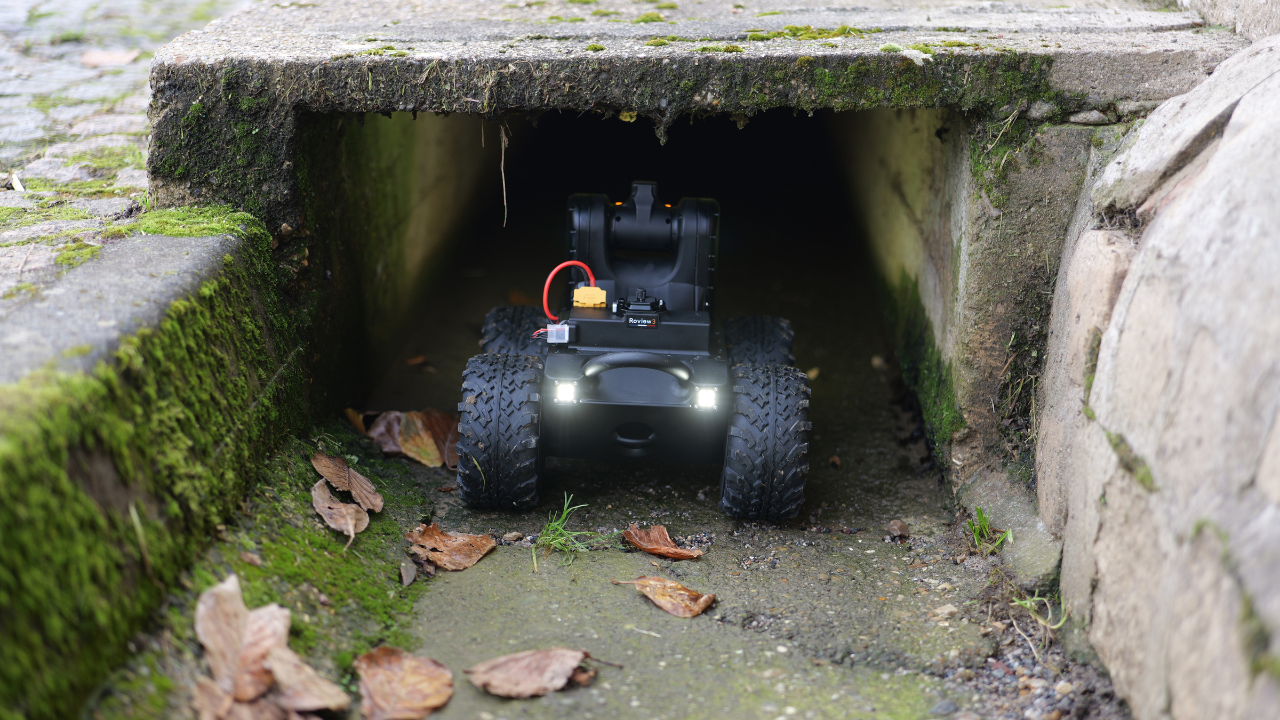
The Roview3 is presented by Multinnov as a next-generation TV inspection robot, designed for sewer systems and pipelines. Its key feature: it operates wirelessly, using a radio remote control that allows the inspection to be monitored in real time. This approach simplifies on-site work and reduces logistical requirements compared to traditional wired systems.
The Roview3 isn’t just mobile. It features a 4K30i camera designed to capture the details of inspected networks with high image quality. This capability facilitates the analysis of internal walls and the detection of cracks, deposits, deformations, or other visible anomalies.
Another key feature is its lighting. Multinnov notes that the Roview3 features 16,000-lumen lighting, which is essential in dark pipes, where the quality of the inspection depends directly on visibility.
The robot is also designed to withstand harsh conditions. It is fully waterproof, with sealed components to prevent the ingress of water, dust, or mud. This complete waterproofing is particularly important for wet or partially filled pipelines.
Finally, the Roview3 stands out for its buoyancy. Unlike heavier, more rigid vehicles, it can both drive and float, allowing it to adapt to a variety of terrain conditions and continue the inspection where some conventional solutions reach their limits.
Tangible benefits for network operators and maintenance teams
For operators, the benefits of wireless technology go beyond mere convenience. It is fundamentally transforming the way inspections are planned, conducted, and managed.
Greater mobility in the field
Without a cable to constantly manage, the operator has greater freedom of movement. The robot can navigate more easily through complex areas, particularly where the network has buildup, changes in configuration, or damp sections.
This flexibility results in a more streamlined inspection process that is better suited to actual field conditions.
Greater safety for teams
The Roview3 reduces operators' direct exposure to hazardous environments. Technicians remain at a distance while maintaining a real-time view of the inside of the pipe.
This is a key advantage for operations in confined spaces, where every human entry requires rigorous, regulated procedures.
Data that can be used immediately
The Roview3's measurement interface allows you to track useful information such as distance traveled and inspection duration. It also lets you capture photos and videos in real time to document field observations.
This traceability makes it easier to:
- report writing;
- a comparison of inspections;
- prioritizing repairs;
- monitoring the network's status over time.
A sustainable economic benefit
Faster, more mobile, and better-documented inspections help operators focus their efforts on the right areas. This prevents unnecessary work, minimizes the need for trenching, and improves maintenance planning.
The benefit is therefore twofold: greater operationalefficiency and cost savings over the infrastructure’s lifespan.
Pipeline inspection is evolving rapidly. Given the limitations of wired systems and the challenges posed by underground networks, wireless solutions offer a more flexible, secure, and practical approach that is better suited to real-world conditions.
With the Roview3, Multinnov offers an inspection robot designed for professionals: wireless control, 4K camera, powerful lighting, fully waterproof, and buoyant. These features make it a particularly valuable tool for modernizingvisual inspections, improving diagnostic reliability, and optimizing network maintenance.
For operators, adopting a wireless solution is no longer just a matter of technological innovation. It is a strategic choice designed to save time, reduce risks, and provide better oversight of the condition of the pipelines.