
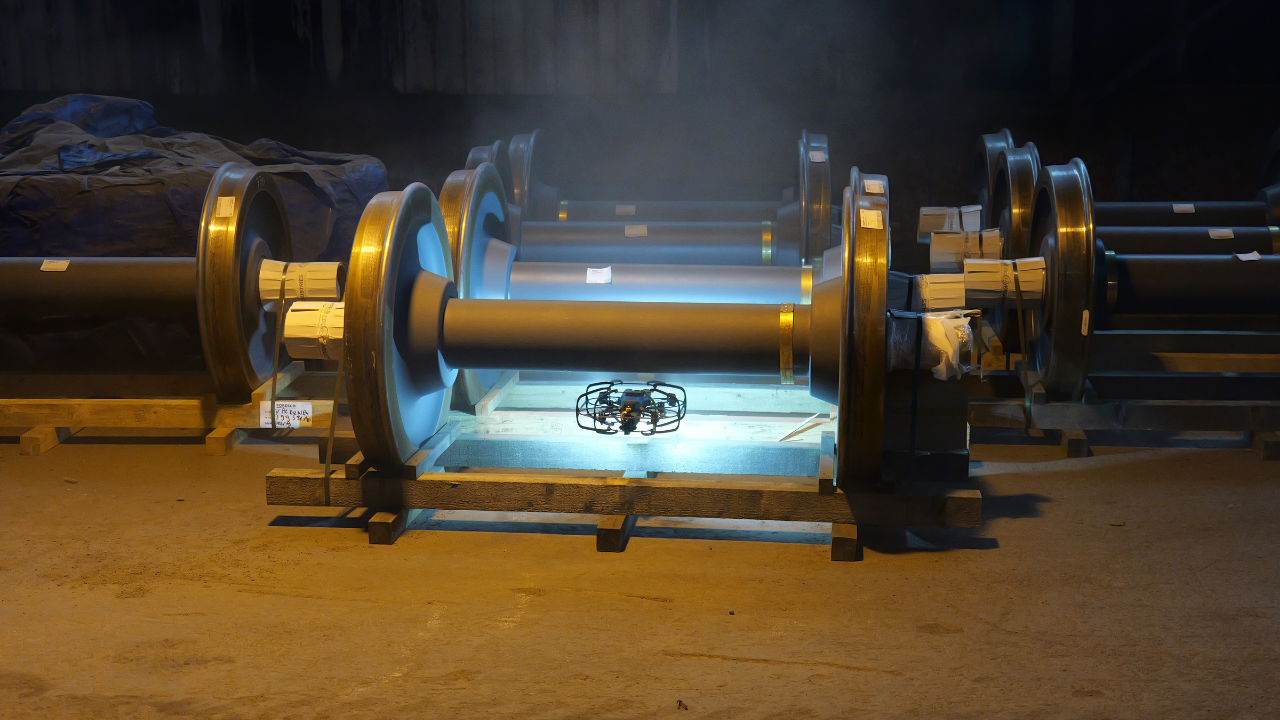
In many industrial sectors, inspecting infrastructure and equipment is essential to ensuring their reliability and preventing failures. However, some inspections can be time-consuming, costly, or risky when they involve difficult access or challenging environments.
Non-destructive testing (NDT) makes it possible to assess the condition of a structure or piece of equipment without damaging it or interrupting its operation. This approach is widely used in industry to detect defects invisible to the naked eye and plan maintenance operations in advance.
The integration of drones into NDT operations represents a major advancement today. By combining mobility, advanced sensors, and visual inspection technologies, these systems enable rapid access to complex areas while improving the safety and efficiency of industrial inspections.
Understanding Non-Destructive Testing (NDT) Using Drones
Non-destructive testing encompasses a range of techniques used to assess the condition of a material or structure without compromising its integrity. Unlike destructive methods, which require sampling or disassembly, NDT allows for direct inspection of equipment while it is in service.
In the context of drone inspections, this approach relies on the use of aerial or robotic platforms capable of carrying various analytical sensors. These systems can move around a structure, capture detailed images, or collect technical data to detect anomalies.
Among the most commonly used technologies in drone-based NDT are high-resolution cameras, which enable precise visual inspections. They are particularly effective at identifying cracks, surface damage, or structural defects.
Thermal sensors, on the other hand, are used to detect abnormal temperature fluctuations. This technology is frequently used for inspecting energy infrastructure or solar panels.
LiDAR is another key technology. Using a laser remote sensing system, it generates accurate 3D models of the structures being inspected and detects any deformations.
Finally, certain industrial applications also use ultrasonic sensors, which can measure the thickness of materials or detect internal defects that are invisible on the surface.
By combining these technologies, drones become powerful inspection tools capable of performing quick and reliable diagnostics in complex environments.
Industrial Applications of Non-Destructive Testing Using Drones
Drones designed for non-destructive testing are now used in a wide range of industrial applications. Their ability to access hard-to-reach or hazardous areas makes them particularly well-suited for inspecting critical infrastructure.
In the transportation infrastructure sector, drones are used, for example, to inspect bridges, viaducts, and certain metal structures. They make it possible to quickly identify cracks, corrosion, or damage without having to use heavy-duty access equipment such as scaffolding.
Industrial pipelines and networks are another key area of application. Regular inspection of this infrastructure is essential to prevent leaks or structural failures. Drones make it possible to conduct these inspections quickly, while minimizing human involvement in potentially hazardous environments.
In theenergy sector, drone-based NDT is used to inspect wind turbines, power lines, and petrochemical facilities. Onboard sensors detect structural, thermal, or mechanical anomalies that could compromise the equipment’s operation.
Drones are also used to inspect industrial buildings and complex structures, particularly when certain areas are difficult to access. They enable detailed visual inspections while reducing logistical challenges.
In these various contexts, drones help improvethe efficiency of inspection operations while enhancing the safety of the teams.
Outlook and Best Practices
The development of drones and inspection robots is opening up new possibilities for non-destructive testing in industry. Advances in sensors, battery life, and data analysis are paving the way for increasingly precise and automated inspections.
Solutions developed by innovative companies such as Multinnov are part of this trend. By combining advanced visual inspection, robotics, and technologies suited to confined spaces, these systems improve data collection and optimize maintenance operations.
However, to fully leverage drone-based NDT, certain best practices must be followed. Inspections must be conducted by trained operators who are capable of correctly interpreting the collected data. It is also essential to establish inspection protocols tailored to the specific characteristics of each infrastructure.
Finally, the data collected during inspections must be properly archived and analyzed to facilitate the long-term monitoring of equipment. This approach allows for the integration of non-destructive testing into a comprehensive preventive maintenance strategy.
Drone-based non-destructive testing represents a major breakthrough in industrial inspection today. By combining sensor technology, mobility, and high-precision visual inspection, these systems make it possible to analyze infrastructure without causing damage and without exposing operators to unnecessary risks.
Thanks to their ability to access hard-to-reach areas and provide detailed data, drones help improve the safety,efficiency, and reliability of inspections. In an industrial context where failure prevention and maintenance optimization have become essential, drone-based NDT is gradually establishing itself as an indispensable tool.
Innovations driven by specialized players such as Multinnov are playing a key role in this transformation by offering technologies tailored to the needs of professionals in industry and technical inspection.