When it comes to wastewater and stormwater networks, getting a clear view of the inside of the pipes is the key to making the right decisions quickly and efficiently: should you clean, line, replace or simply monitor? Sanitation diagnostics answer precisely this question. It combines televisual inspection (TVI), standardized defect surveys and analysis to guide work, secure structures and meet regulatory requirements. In France and Europe, NF EN 13508-2+A1 provides the reference for visual inspection and coding of anomalies (cracks, root intrusions, ovalization, deformations, parasitic connections, etc.). This standardization ensures that findings are comparable from one operator to another, and can be integrated into asset management.
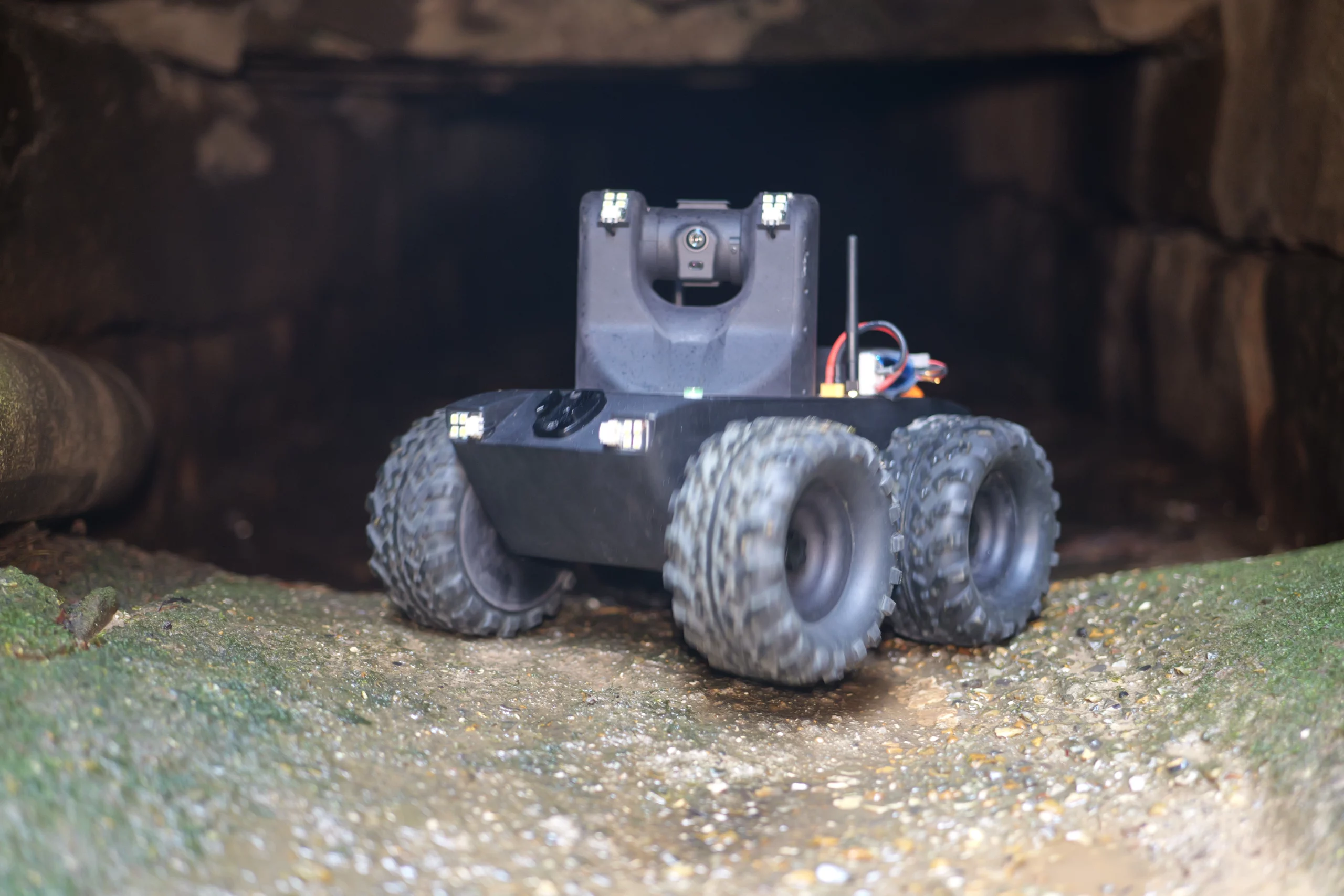
At the heart of this approach, Multinnov designs solutions dedicated to confined environments. Its inspection robot Roview2 inspection robot meets today's challenges: operator safety, image quality, productivity and the ability to intervene where conventional methods struggle (partially flooded pipes, difficult-to-access manholes, technical galleries, basins).
Why inspect wastewater systems?
Inspecting means preventing malfunctions in the first place. A pipe that cracks, collapses or becomes clogged with deposits or roots ends up losing its hydraulic capacity, causing overflows, accelerating corrosion or generating parasitic water ingress. ITV makes it possible to objectify these phenomena andavoid costly disasters: local flooding, environmental pollution, deterioration of roads, shutdowns of industrial units. Reports, coded in accordance with NF EN 13508-2, are used to support decision-making (cleaning, rehabilitation, watertightness checks, monitoring).
It's also a question of compliance. Public and private-sector clients alike are demanding post-work acceptance checks and regular diagnostics. Standardized coding avoids subjective interpretations: a defect observed by service provider A will be read in the same way by service provider B, and integrated without friction into a GIS or asset management software. This traceability is now a standard for local authorities and large operators.
Finally, inspection becomes an investment strategy tool. By aggregating inspections, managers can prioritize the sections to be rehabilitated, plan multi-year budgets and reduce the network's overall cost of ownership. Technical charters remind us that inspection and its standardized codification are at the heart of a rational decision to carry out rehabilitation work.
The Multinnov solution: see better, see faster, see safely
Roview2: the ITV robot designed for image quality and versatility
The Roview2 is an HD/4K TV inspection robot designed to squeeze through narrow or hard-to-reach pipes. Its 4K camera and factory-calibrated fixed focus ensure sharp, repeatable images, even in dusty or damp environments. The aim is clear: to maximize the value of data, because reliable diagnosis starts with a faithful image.
A special feature of the Roview2 is its floating/amphibious version, which means that it can work in partially flooded networks, basins or pipes with water ingress , without the need for prior pumping. This changes the economic equation: less preparation, fewer work stoppages, more useful inspections per day. Watertightness, buoyancy and autonomy enable precise documentation of the condition of structures directly in the aquatic environment.
Beyond capture, the Roview2 has been designed with post-inspection in mind. Multinnov emphasizes its compliance with NF EN 13508-2, with the ability to generate reports that can be used by local authorities and operators, and easily integrated into GIS systems. The benefits are twofold: field teams save time when surveying, and engineering teams don't have to laboriously reprocess data.
A tool-based approach to ITV
Multinnov regularly publishes resources on ITV and its best practices: mission framing, preparation (preliminary cleaning, safety plan in confined spaces), inspection procedure, and structuring the report in compliance with the standard. This educational approach makes it easier for technical teams to assimilate and ensures the quality of our services.
Concrete benefits for local authorities and manufacturers
The first benefit is economic. By combining a 4K robot and, if required, an indoor drone, we can reduce preparatory operations (pumping, scaffolding, heavy ventilation), speed up tours and limit downtime. The floating version of the Roview2 is a good illustration of this logic: less drainage means more inspections carried out for the same budget, and less disruption to service (station or network maintained under load). Multinnov publications emphasize these time and cost savings in real-life situations.
The second benefit is quality and traceability. High-definition images, appropriate lighting and calibrated optics improve the detection of micro-defects (incipient cracks, porosities, joint defects). When these findings are codified in NF EN 13508-2, the report becomes a solid basis for prioritizing sections to be rehabilitated, investigating a claim, or verifying acceptance after work has been completed. Best practice charters emphasize the importance of a standardized inspection report in securing decisions and contractual relations.
Third benefit: safety. Inspections in deep manholes, lift stations, tunnels or pipes require "confined space" procedures (gas detection, ventilation, lockout, PPE). By substituting a robot or drone for an operator, we reduce exposure to risks (asphyxiation, falls, toxic atmosphere) while increasing the rate of image acquisition. Multinnov clearly positions its solutions in this "zero-entry" niche whenever possible.
Fourth benefit:data interoperability. A structured, standardized report is easier to integrate into business software (GIS, CMMS) and feeds into asset strategy. Managers can cross-reference inspection, incident history, soil and traffic data to rate each section and plan the most cost-effective rehabilitation (lining, sheathing, replacement). Multinnov highlights this GIS integration in its presentation of deliverables Roview2.
Finally, there is an organizational benefit: from the mission statement to the codified report, the ITV method is transparent and reproducible. Both public and private sector buyers appreciate the comparability of services and theobjective assessment of network quality. Industry resources in France point out that this standardization has become a hallmark of professionalism in network inspection.
How to carry out a successful diagnosis: a few operational guidelines
An effective sanitation diagnosis begins with a clear framework: objectives (acceptance of work, pre-rehabilitation, damage), perimeter, access conditions, safety constraints. Depending on the presumed condition of the pipes, prior cleaning may be necessary to avoid misinterpretations due to deposits. In the field, the inspection trajectory (downstream → upstream, or the reverse depending on constraints) and feed speed are chosen to optimize sharpness.
In an aquatic environment, the floating version of the Roview2 will limit manoeuvres and enable documentation of submerged areas that conventional forklifts can't reach. Last but not least, the immediate coding of defects, based on 4K images and NF EN 13508-2 terminology, speeds up the production of GIS-compatible reports and the decision to proceed with work.
Sanitation diagnostics is a high-value approach: it prevents malfunctions, secures facilities and guides investments with method. By using ITV and a common reference system (NF EN 13508-2), operators gain in analysis speed, traceability and data interoperability.
In operational terms, solutions from Multinnov - the Roview2 for pipelines, including floating configurations, and the Stereo2 for confined spaces where a robot can't roll - extend network inspectability while reducing human risk and improving tour profitability.
Technical publications and feedback confirm that image quality, standards compliance and usable deliverables have become the keys to credible, actionable diagnostics. For local authorities and manufacturers alike, it's a winning trio: see better, decide faster, and invest in the right place.