Although invisible, the sewer infrastructure plays a critical role in managing wastewater and stormwater. However, these aging systems are subject to numerous challenges, including corrosion, leaks, blockages, and subsidence.
In this context, traditional inspection methods quickly reach their limits. Difficult access, risks to operators, high costs… all of these factors complicate maintenance.
This is precisely where the solutions developed by Multinnov make a real difference, combining innovation, visual inspection, and inspection robots to modernize diagnostic practices.
The Challenges of Diagnosing Sewer Systems
Inspecting a sewer system is no small matter. These systems are often underground, narrow, damp, and sometimes dangerous.
Challenging environments
Underground pipes and networks present several challenges:
- Confined and hard-to-reach areas
- Presence of water, gas, or deposits
- Reduced or even zero visibility
- Health risks for operators
In some cases, direct human intervention is simply impossible or strongly discouraged.
Limited traditional methods
Historically, inspections were based on :
- Human activities in confined spaces
- Heavy equipment
- Inaccurate spot inspections
These approaches are not only costly, but also risky and ineffective on a large scale.
Conversely, modern technologies now make it possible to collect accurate data without direct human exposure, while also speeding up operations.
The innovative solutions offered by Multinnov
To address these challenges, Multinnov relies on a technological approach centered onautomated visual inspection and ITV inspection robots.
The Key Role of Roview3
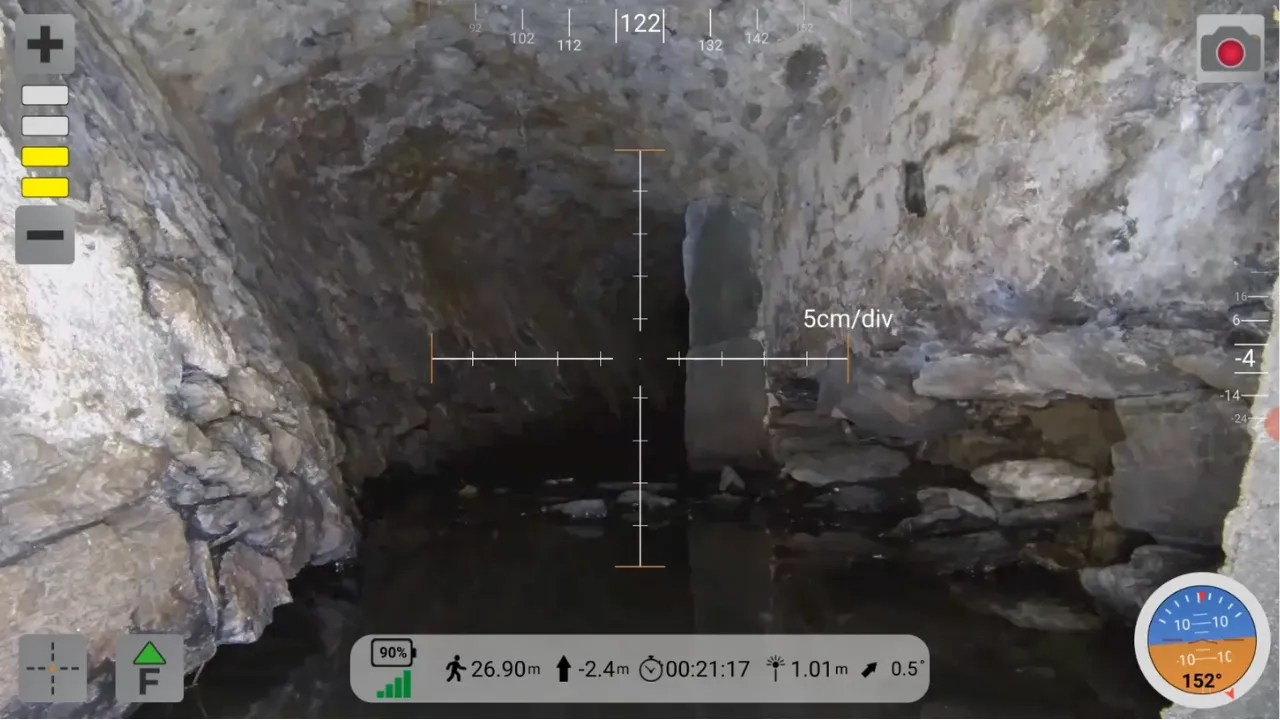
At the heart of this innovation is the Roview3 has established itself as a high-performance solution for diagnosing sewer systems.
This inspection robot is designed to operate in complex and confined environments, while offering:
- A high-definition inspection camera
- Real-time video streaming
- The ability to navigate through narrow pipes
- Reliable and actionable data collection
Thanks to these features, it is now possible to closely inspect the interior of pipes, identify defects, and document the condition of the infrastructure.
A modernized vehicle inspection
Camera-based inspection (CBI) is not new, but it is evolving rapidly thanks to onboard technologies.
The systems developed by Multinnov enable, in particular:
- Better image quality (HD / 4K)
- More precise detection of defects (cracks, corrosion, deposits)
- Full traceability of service calls
- Easy integration into maintenance processes
The data collected can then be analyzed to make accurate assessments and prioritize interventions.
Technology for confined spaces
Unlike traditional methods, these robots are specifically designed for confined spaces where human access is difficult or even impossible.
They thus enable:
- To explore inaccessible areas
- To limit high-risk procedures
- To ensure business continuity
This ability to access hard-to-reach areas is one of the key advantages of robotic solutions, particularly in underground infrastructure.
Benefits for maintenance operations
The integration of Multinnov solutions into sewer system diagnostics delivers tangible benefits at every level.
Enhanced safety
The first benefit is obvious: reducing human exposure to risks.
Inspection drones and robots make it possible to avoid working in hazardous environments, thereby reducing accidents and improving working conditions.
Time savings and operational efficiency
Whereas a traditional inspection can take several hours, robotic solutions make it possible to:
- Rapid response
- Broader network coverage
- Reduced downtime
Inspections can now be completed in a matter of minutes or hours, compared to several days in the past.
Cost reduction
Fewer staff members required, less heavy equipment, fewer production stoppages… the savings are significant.
Some studies estimate that drones and robots can reduce inspection costs by up to 90% in certain situations.
Reliability and accuracy of diagnoses
Thanks to onboard sensors (HD cameras, specialized sensors), inspections become:
- More precise
- More reproducible
- Better documented
Issues are detected earlier, allowing for proactive action and a shift from corrective maintenance to preventive maintenance.
Better decision-making
The data collected is not limited to images. It serves as a basis for strategic analysis for operators:
- Prioritization of work
- Scheduling of interventions
- Monitoring Infrastructure Development
This data-driven approach significantly improves overall network management.
Given the growing challenges associated with managing sewer systems, traditional solutions are no longer sufficient. Requirements for safety, performance, and compliance necessitate a transformation in inspection methods.
By combining inspection robots, inspection cameras, and advanced visual inspection technologies, Multinnov offers a practical and effective solution to these challenges.
The Roview3, in particular, perfectly illustrates this evolution: capable of exploring confined spaces, collecting reliable data, and ensuring operational safety, it has established itself as an indispensable tool for professionals in the sector.
More than just a technological advancement, this represents a true paradigm shift: moving from reactive inspection to proactive, predictive, and optimized maintenance.