The inspection of pipes, whether for sewerage, water supply or service networks, has historically been a complex and costly exercise. Traditional methods, such as push-cart cameras (ITV) or wired robots, often require time-consuming interventions, specialized equipment and trained teams. Today, inspection drones, whether flying or ground-based, offer an innovative, faster, safer and potentially more cost-effective solution.
Inspection drones: a new approach to pipelines
Modern drones dedicated to pipe inspection are designed to operate in difficult, even confined environments. For example, French company Drone-Team uses drones like Flyability's Elios 2 to inspect underground sewer networks, avoiding the need for operators to physically enter hazardous areas.
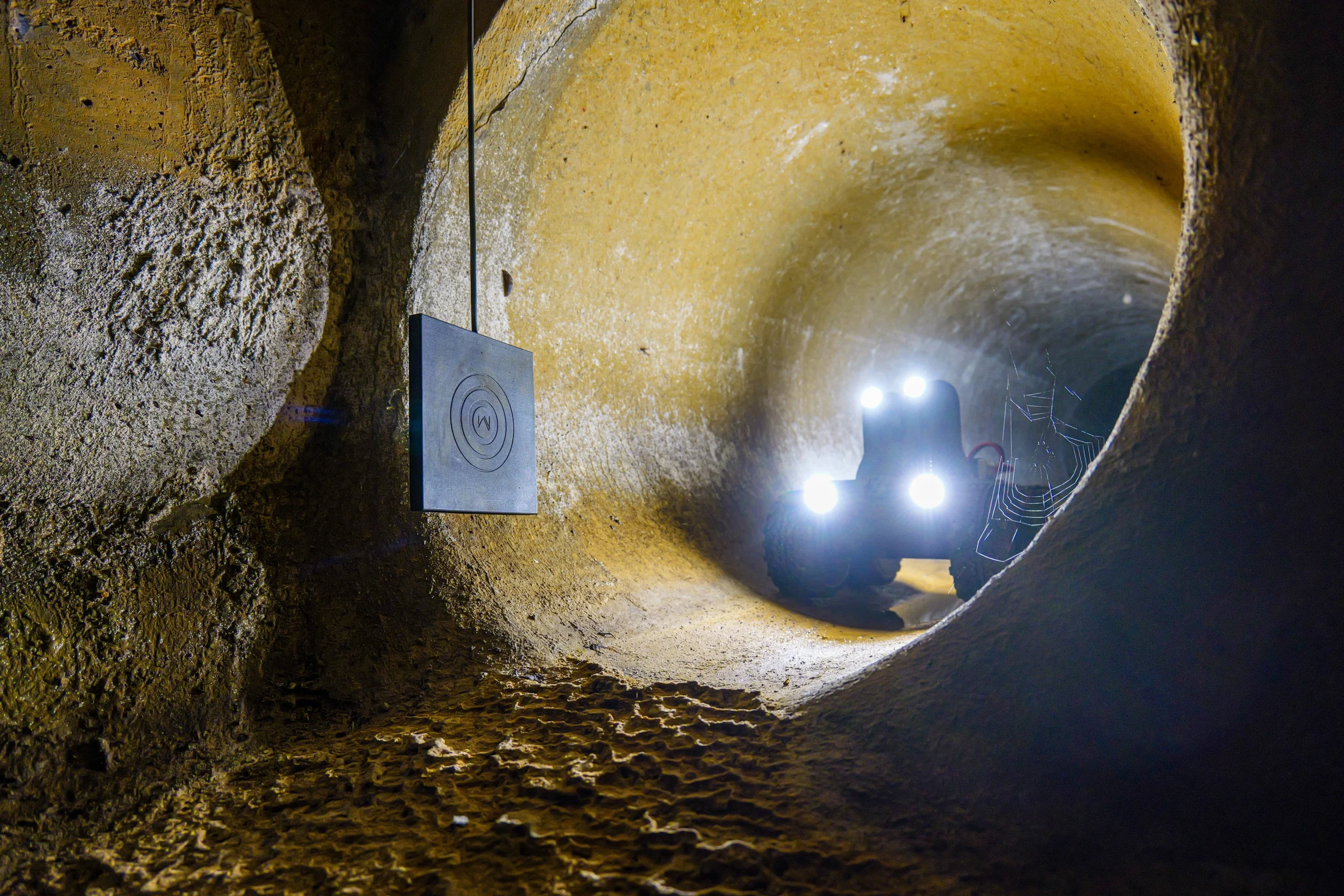
In a different register, the Roview2 from Multinnov is a hybrid robot (rolling and floating) designed for use in pipes, service tunnels or flooded ducts. Thanks to its 4K camera, powerful LED lighting and wireless transmission, it offers high-end visual inspection capability even in highly constrained environments.
Other systems, such as CT2MC's CAN'EAU range, use floating drones specially designed for water and wastewater networks. These machines are equipped with 360° cameras, LiDAR or rotating sonars to model the internal geometry of pipes and detect hazardous gases.
These technologies enable us to cover long distances quickly, access areas that are difficult to visit, and collect precise visual and geometric data.
A faster, cheaper alternative?
Time savings: Inspection drones can survey several hundred or thousands of meters in a matter of hours, much faster than manual inspections or wired carts, which are often limited by cable unwinding logistics or access. According to Angell Surveys, drones can cover large sections of pipe very quickly, drastically reducing intervention times.
Cost reduction: Using a drone often eliminates the need for heavy equipment (scaffolding, gondolas) and reduces the need for on-site personnel. According to EPCM, drone inspection can reduce labor, safety and surveillance costs, while minimizing infrastructure downtime.
Increased safety: Thanks to drones, human intervention in confined or potentially dangerous spaces is limited, reducing the risk of accidents. Systems such as the Roview2 enable exploration of pipelines without total immersion of the operator, avoiding exposure to stagnant water, toxic atmospheres or unstable structures.
Durability and difficult access: For pipelines located in remote areas, difficult to access, or underground, drones offer a flexibility that traditional methods struggle to achieve. According to Garud Survey, drones cover significant distances without the need to deploy heavy infrastructure, thus reducing carbon and logistical footprints.
Comparison with traditional methods
| Traditional method | Main limits |
| Wired ITV cart | Requires long cable, physical access, heavy logistics. |
| Robot push / crawler | Limitations in flooded areas, deployment difficulties on unstable terrain. For example, the Pipe Trekker A-200 is very robust, but requires a cable reel and a structure to launch it. |
| Manual inspection | Risks for operators, confined atmospheres, time-consuming and costly work. |
In contrast, inspection drones offer :
- Wireless mobility: some models, such as the Roview2, require no cable, which simplifies deployment.
- Versatility: some drones, like the Roview2, are designed to float or move over wet or dry terrain.
- Advanced sensors: 4K cameras, LiDAR, sonar, gas detectors (for CAN'EAU floating UAVs) provide highly detailed diagnostics.
- Real-time feedback: instant video transmission enables the operator to react immediately, adapting the inspection mission or zooming in on a potential defect.
- Reporting and traceability: captured data (videos, photos, 3D models) can be saved and replayed for later analysis or auditing purposes.
Pipe inspection drones represent a fast, safe and cost-effective alternative to traditional methods, particularly for hard-to-reach or hazardous infrastructures. Solutions such as the Roview2 from Multinnov and CT2MC's CAN'EAU range demonstrate how technological innovation can reconcile inspection performance and risk reduction.
By enabling high-precision visual diagnostics, limiting the need for manual intervention and accelerating the frequency of network assessments, inspection drones are becoming a strategic lever for pipeline operators. For professionals in the wastewater, water or industrial process sectors, investing in these technologies means greater efficiency, safety and cost control.
These systems show that tomorrow's inspection will not necessarily be carried out with wired cameras or push wheels, but with intelligent drones and robots - a revolution in sustainability, performance and innovation.