
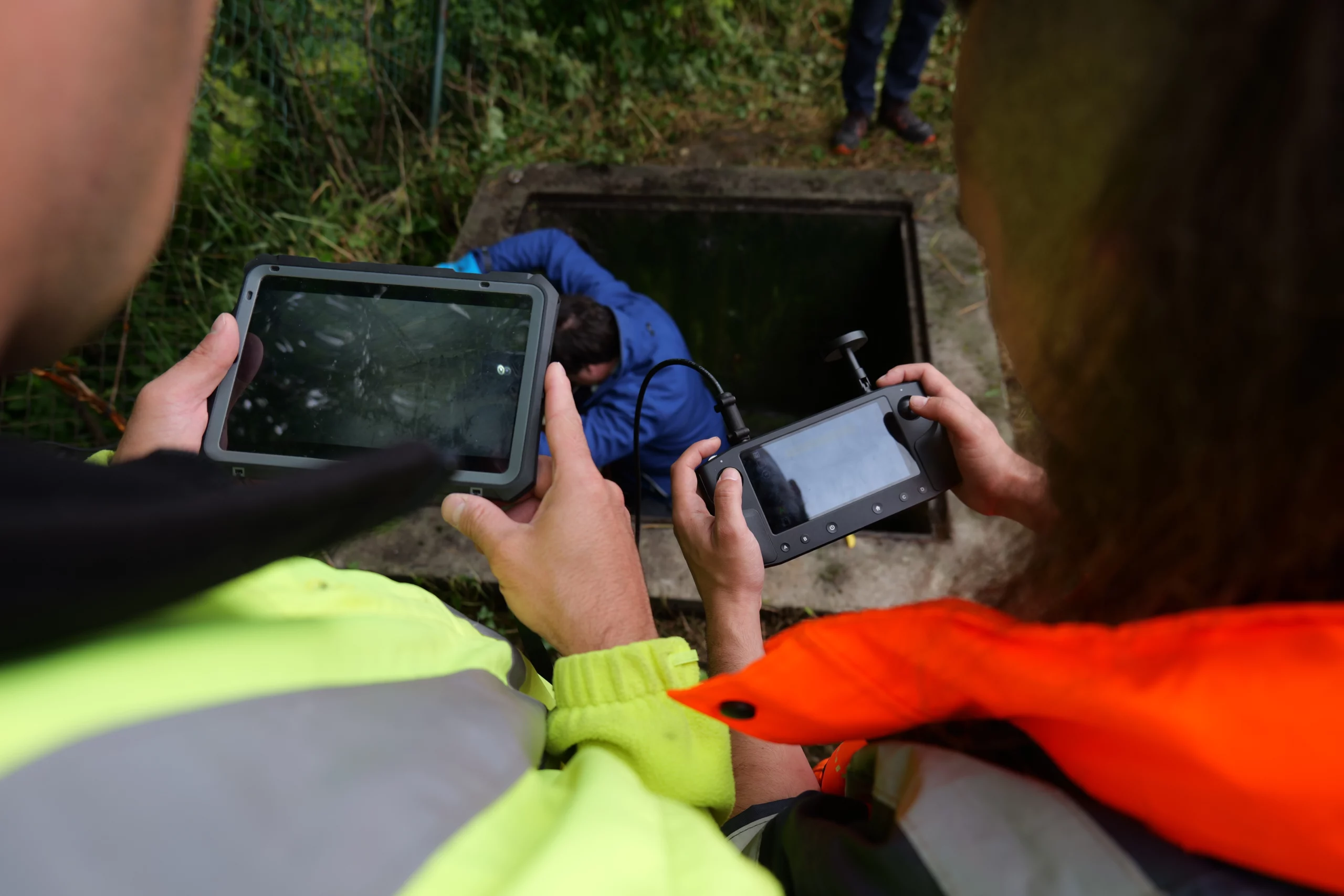
Industrial inspections are an essential part of infrastructure safety and performance. In certain environments, these operations become particularly complex: such is the case of confined environments. Whether in tanks, reservoirs, pipes or underground galleries, the technical and human constraints are numerous. The risks for operators are high, while operations are often lengthy and costly.
Faced with these challenges, new technological solutions are emerging to transform practices. Among them, the drones and inspection robots developed by Multinnov occupy a prime position. Thanks to their maneuverability, ability to operate in confined spaces and state-of-the-art equipment, these innovations open the way to safer, faster and more cost-effective inspection.
Hazards of confined space inspections
Major human risks
Confined environments have characteristics that make them hazardous for humans. One of the main dangers is the lack of oxygen, which can lead to rapid loss of consciousness. Added to this are toxic gases (methane, hydrogen sulfide, ammonia), frequently present in industrial installations or sewage systems. These gases are not always perceptible without specific sensors, increasing the risk of accidents.
Total darkness is another constraint, requiring powerful artificial lighting to work. Limited access - narrow hatches, ladders, flooded areas - adds to the danger, sometimes making direct human intervention impossible.
Regulatory constraints
Work in confined spaces is strictly regulated by law. In France, the Labor Code imposes precise rules concerning ventilation, gas detection, personal protective equipment and the presence of rescue teams. These obligations, which are necessary to ensure worker safety, add to the time and cost of operations.
Limits of traditional methods
Until recently, inspections relied essentially on human intervention. Operators, equipped with wired or handheld cameras, had to physically enter structures. This approach had three major drawbacks:
- High costs: mobilization of large teams, installation of safety devices, production stoppages.
- Slowness of execution: preparation takes a long time, and interventions sometimes last several days.
- Persistent risks: despite all precautions, accidents involving gas or falls are still possible.
These limitations explain why manufacturers are looking for alternative solutions capable of reducing hazards while increasing efficiency.
The role of drones in safe inspection
Technology for confined spaces
Specialized drones for confined-area inspection differ from conventional models designed for hobby or aerial photography. They are designed to operate in narrow, dark and sometimes cluttered environments. Thanks to their maneuverability and integrated lighting systems, they provide a clear view of even the most inaccessible areas.
Multinnov, a company renowned for its expertise invisual inspection in confined spaces, has developed a number of innovative solutions to meet the specific needs of industry.
Stereo2: a drone for complex spaces
The Stereo2 is one of Multinnov's flagship drones. Designed to operate in cramped environments, it is equipped with high-definition cameras capable of delivering precise images even in total darkness. Its stabilization system enables it to move around galleries and tanks with great precision.
Its strengths include..:
- Stereoscopic vision for 3D perception.
- Resistance to harsh environments, including dust and humidity.
- Real-time image transmission for instant analysis by engineering teams.
Thanks to this system, inspections can be carried out rapidly, without the need for operators to intervene directly in high-risk areas.
Roview2: a complementary inspection robot
While the Stereo2 meets the needs of confined aerial environments (tanks, reservoirs, galleries), the
Roview2 specializes intelevisual inspection (TVI ) of sewer networks and pipes partially filled with water. A veritable inspection robot, it moves along the surface of liquids, transmitting high-definition images to detect cracks, deposits or obstructions.
This inspection cart is indispensable in environments where an aerial drone cannot operate. The two technologies - drone and robot - are thus complementary, offering complete coverage of industrial needs.
Innovation for safety and efficiency
Integrating drones and robots into inspection operations makes it possible to :
- Eliminate human risks: no need to send an operator into a hazardous area.
- Reduce intervention times: an inspection that used to take several days can now be carried out in just a few hours.
- Improve data quality: on-board cameras capture sharp, detailed images, facilitating early detection of anomalies.
Benefits and prospects for manufacturers
Reducing human risks
The first advantage is obvious: by entrusting inspection to drones and robots, operators are no longer directly exposed to the dangers of confined environments. This reduces workplace accidents and improves overall safety conditions.
Reduced downtime
Inspections often require a plant to be shut down, resulting in considerable loss of earnings. Thanks to Multinnov's fast turnaround times, downtime is greatly reduced, enabling manufacturers to maintain their productivity.
Cost optimization
Less manpower, less safety equipment to deploy, fewer days of downtime: the savings generated by the use of drones and inspection robots are significant. In the long term, these investments pay for themselves and contribute to better budget management.
Better intervention planning
The accuracy of the data collected enables problems to be anticipated before they become critical. Cracks, deposits or corrosion are detected earlier, making it easier to implement preventive maintenance plans. This reduces the need for emergency repairs and minimizes the number of major incidents.
Future prospects
The next few years will see the integration of even more advanced technologies:
- Artificial intelligence to automatically analyze images and detect anomalies.
- Greater autonomy for drones, capable of navigating complex environments on their own.
- Integration with infrastructure management systems, to link inspection data directly to maintenance software.
Thanks to its expertise and commitment to innovation, Multinnov is fully in line with this dynamic.
Inspection in confined spaces represents a major challenge for industry, due to the human risks, costs and technical constraints involved. Traditional methods, though effective, are now reaching their limits.
By offering innovative solutions such as Stereo2 and the Roview2, Multinnov is transforming practices. Its inspection drones and robots enable rapid intervention, reliable data collection and operator safety. The benefits are many: risk reduction, time savings, cost optimization and problem anticipation.
The future of confined space inspection undoubtedly lies in these cutting-edge technologies. For manufacturers, relying on a partner like Multinnov means choosing safety,efficiency andinnovation.