
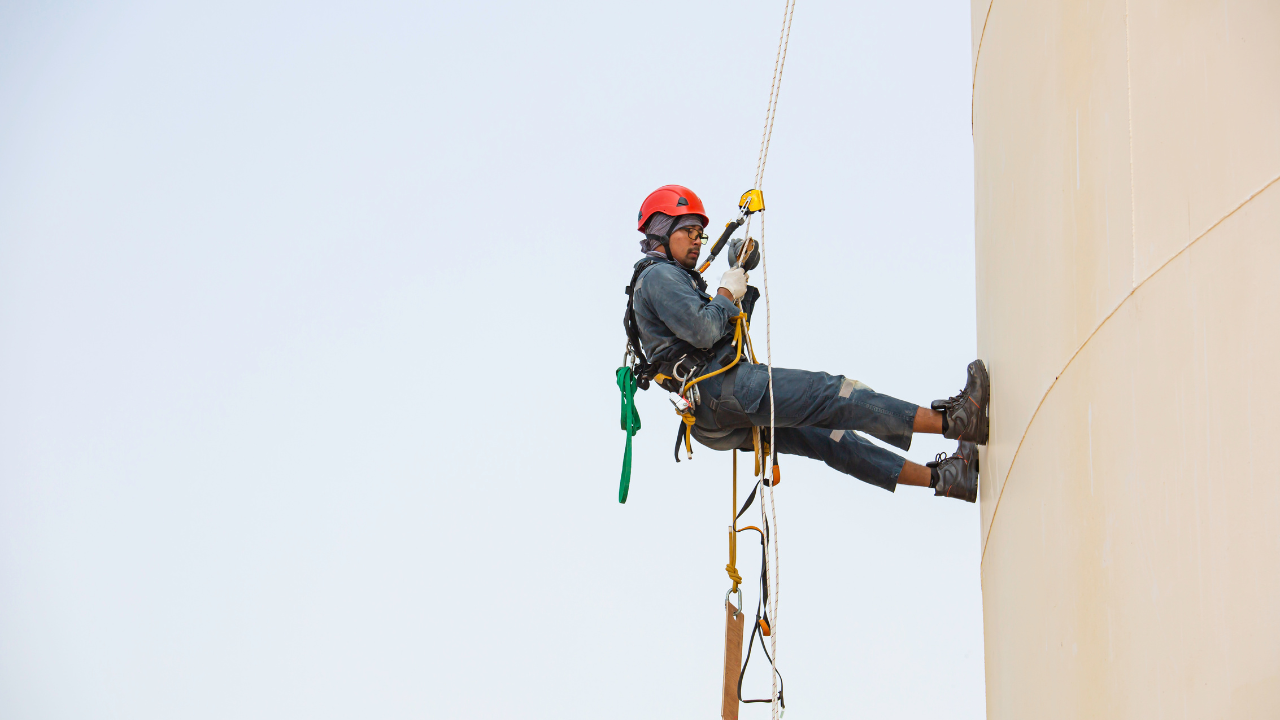
In many industrial sectors - chemicals, food processing, energy - storage tanks and vessels are critical components. Their regular inspection is imperative to ensure that they are watertight, structurally sound and safe to operate. Traditionally, these inspections involve working at height or in confined spaces, with the installation of scaffolding or the use of rope access technicians. However, this approach is costly, slow and risky.
Today's solutions involve the use of drones specially designed for harsh environments, revolutionizing the visual inspection of these infrastructures. By enabling rapid access to complex areas, minimizing risks for operators and delivering high-resolution images, these technologies represent a quantum leap in efficiency and safety.
Traditional inspection constraints
Inspecting a tank or reservoir involves a number of significant constraints:
- Difficult access: Access hatches are often narrow or located high up. The cylindrical or conical configuration of the reservoir makes internal progression complex.
- Hazardous environments: The inside of these structures can present a confined environment: lack of ventilation, gas atmosphere, darkness, presence of chemical residues.
- Working at height and heavy logistics: Installing scaffolding or a rope access system involves lengthy preparation, production stoppages and costly interventions.
- Long response times: A conventional inspection can take several days, involve several people and result in lost production.
- Visibility and imaging quality often limited: Lighting conditions, limited access or operator fatigue can alter the quality of observations.
These constraints are prompting operators to look for safer, faster and less costly ways of monitoring their tanks and vessels.
The advantages of drones for inspections
Indoor and confined space drones offer a powerful alternative to conventional methods:
- Fast access and low downtime: As stated in an article by the manufacturer Multinnovthe technology makes it possible to enter silos, tanks or cisterns without interrupting production or deploying heavy access installations.
- Improved safety: the operator remains at a distance; the drone navigates indoors, eliminating the risk of exposure to confined spaces and heights. According to a study by supplier Flyability, drones can reduce the cost and risk of human intervention by up to 90%.
- Data quality and accuracy: Equipped with high-definition cameras, thermal sensors or LiDAR, drones provide usable images, modeled in 3D, enabling the detection of cracks, corrosion or previously invisible defects.
- Economy and efficiency: less staff, less downtime, less scaffolding: according to some sources, an inspection can now be carried out in a few hours, compared with several days previously.
These advantages make drones a strategic choice for the maintenance and inspection of industrial tanks and vessels.
Safety, protocols and technological innovations
Security and protocol
The use of a drone for tank inspection must comply with several protocols:
- Remote pilot qualification and compliance with aviation regulations for flights indoors or close to sensitive installations.
- Environmental study: atmosphere, ventilation, obstacles, GPS interference.
- Response plan and emergency resources: in ATEX or confined areas, specific procedures must be put in place.
- Documentation and reporting: images are time-stamped, geotagged and included in a status report.
Technological innovations
The market offers drones designed for confined and difficult environments. For example, the Stereo2 model from Multinnov model is presented as a professional drone adapted to tanks, silos and cisterns, with a protective carbon cage, GPS-free stabilization and stereo camera. These innovations make it possible to navigate in confined spaces, withstand shocks and deliver usable images.
In addition, the integration of complementary sensors (thermal, ultrasound, LiDAR) enables thickness, corrosion or temperature measurements to be carried out without direct contact, offering reliable non-destructive testing. These technological advances reinforce the ability of visual inspection to become a genuine predictive maintenance tool.
Drone-based tank and vessel inspection marks a new era in industrial asset management. Replacing scaffolding and rope access, this approach modernizes visual inspections, reduces risks, optimizes costs and improves data quality. For industry and energy professionals alike, adopting this technology represents a strategic choice: enhanced safety, greater efficiency, tangible savings.
With innovative solutions like those from Multinnov - integrating inspection robot, indoor drone or stereoscopic vision system - visual inspection of difficult environments becomes simpler, faster and more reliable. In short: better inspection, better intervention, lasting safety.