
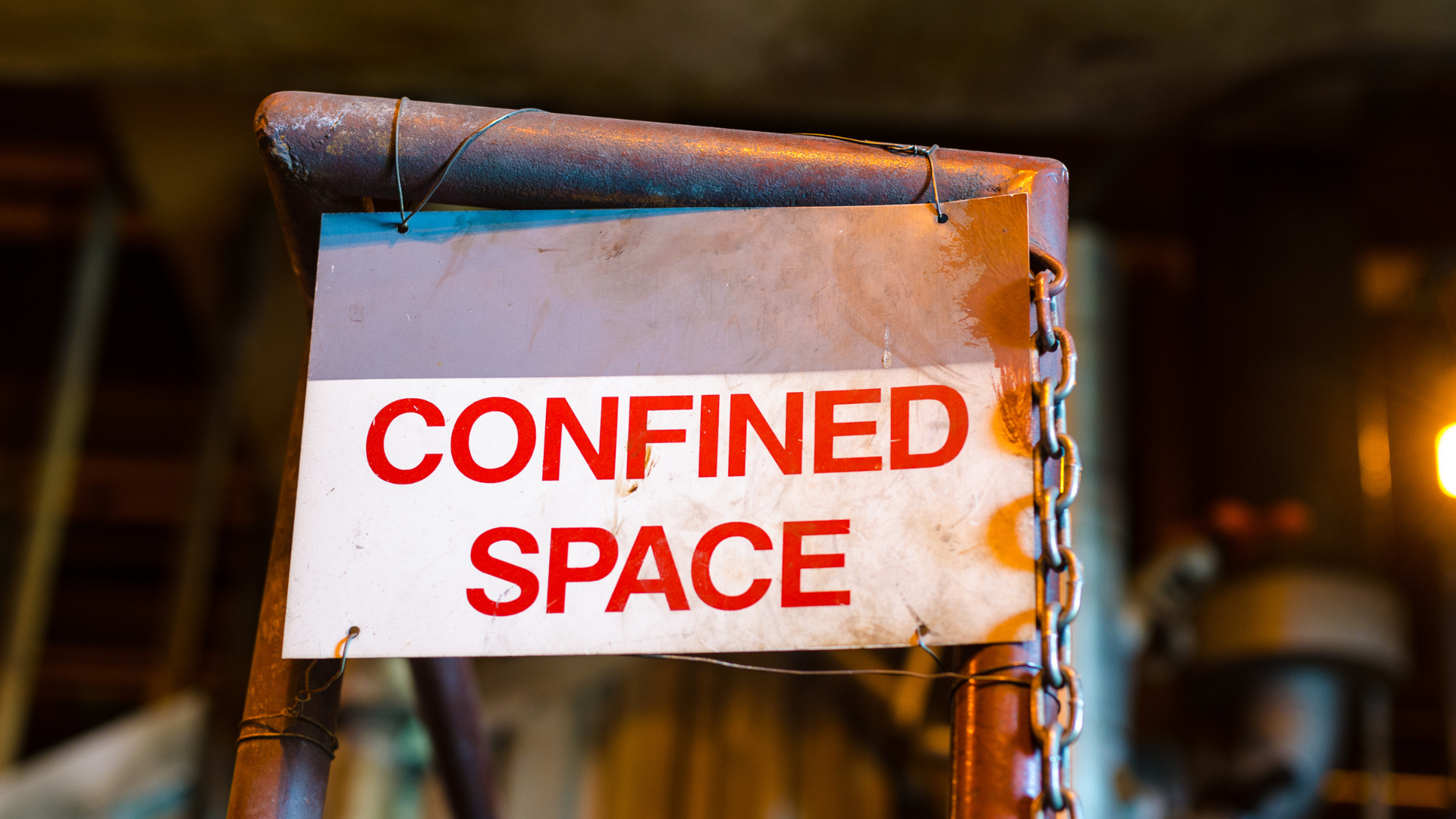
Industrial inspections are an essential link in guaranteeing the safety, reliability and performance of infrastructures. However, certain operations, particularly in confined spaces, pose a number of challenges. Tanks, vats, tunnels, pipelines, technical galleries or reservoirs: all these environments require precise interventions, but expose operators to major risks.
Today, technological innovation provides a concrete response to these constraints. Thanks to their drones and specialized robots, Multinnov is transforming the way inspections are carried out, combining safety, efficiency and cost reduction.
The challenges of confined-space inspections
Confined spaces are defined as totally or partially enclosed areas with limited natural ventilation, which can lead to a hazardous atmosphere. These environments, which are ubiquitous in industry (sanitation, energy, petrochemicals, food production, water or gas transport), represent real technical challenges.
High-risk environments
The main risks encountered during inspections are well documented:
- Lack of oxygen or contaminated atmosphere. Toxic or flammable gases can accumulate rapidly.
- Difficult access. Narrow hatches, the depth of structures or cramped areas complicate intervention.
- Darkness and reduced visibility. Without proper lighting, detecting cracks, corrosion or deposits becomes almost impossible.
- Physical hazards. Falls, mechanical injuries, drowning in partially-filled tanks or collapsing walls.
Every year, a large number of accidents occur in Europe in these contexts, reminding us of the importance of innovating to limit human exposure.
The limits of traditional methods
Until recently, inspections were based on :
- Specialized teams equipped with breathing apparatus, winches and lighting systems.
- The use of ITV (televisual inspection ) carts, which are effective in some pipes but unsuitable for complex environments.
These methods have their limitations:
- High costs for logistics, equipment and plant downtime.
- Prolonged interventions, sometimes lasting several days.
- Direct exposure of operators to hazardous conditions.
In this context, the emergence of specialized robots and drones is bringing about a revolution.
Drones as an innovative inspection solution
Recent advances in robotics, sensors and electronic miniaturization have made it possible to design drones capable of operating in confined environments. Unlike conventional aircraft, these drones are specially designed to meet industrial constraints.
Handy and adaptable
The Roview2 or Stereo2 designed by Multinnov feature navigation systems that allow them to :
- Circulate in narrow galleries and complex ducts.
- Adapt to environments partially filled with water, gas or deposits.
- Reduce the need for dismantling or heavy preparation of installations.
High-definition cameras and integrated lighting
One of the main assets of these drones is their ability to provide high-quality visual inspection. Thanks to high-resolution on-board cameras, coupled with powerful LED lighting systems, operators obtain :
- Sharp, precise images even in total darkness.
- Zoom in to identify corrosion, cracks or structural defects.
- Visual documentation that can be used as evidence for work planning.
Fast data collection and transmission
Drones drastically reduce the time needed to acquire information. Data is transmitted in real time, enabling :
- Immediate analysis.
- Quick decisions on necessary repairs or maintenance.
- Better traceability of inspections to meet regulatory requirements.
Reducing human risks
The most obvious benefit is operator safety. By replacing human intervention in a confined space with a robot or drone, we significantly reduce :
- Exposure to toxic gases.
- Risks of falls or accidents.
- The need to mobilize large teams for operations lasting several hours.
Multinnov, a key player in innovation
Recognized expertise in visual inspection
Since its creation, Multinnov has established itself as a European leader in robotic inspection solutions. The company has developed tools such as the Roview2 (mobile inspection robot for networks and pipes) and Stereo2 (advanced stereoscopic vision system). These solutions are adapted to the most complex confined environments, and provide reliable diagnostics.
An approach focused on safety and efficiency
Multinnov designs its products with a twofold objective in mind:
- Maximum safety for operators.
- Operational efficiency, by reducing inspection time and associated costs.
This philosophy places the company at the heart of today's challenges: reconciling productivity and risk prevention.
A wide range of industrial applications
Today, Multinnov drones and robots are used in a wide range of sectors:
- Sanitation: inspection of sewers, pipes and basins.
- Energy: inspection of pipes, tanks or vats.
- Heavy industry: diagnostics for high-risk metal structures, furnaces or installations.
- Infrastructure: road tunnels, technical galleries, hydraulic structures.
Forward-looking innovation
The company continually invests in R&D to improve its solutions. Expected developments include:
- Integration of additional sensors (thermal, ultrasonic, gas).
- Development ofartificial intelligence systems to automate image analysis.
- Improving theenergy autonomy of drones to cover greater distances.
Inspections in confined environments represent a crucial challenge for the safety and continuity of industrial activities. Faced with the inherent risks and limitations of traditional methods, drones and specialized robots are an essential solution.
With innovations such as Roview2 and Stereo2, Multinnov has established itself as a strategic partner for industrial players. Its technologies not only enhance operator safety, but also improve efficiency and reduce costs.
At a time when risk prevention, digitalization and competitiveness are key concerns, innovating with Multinnov's drones is an obvious way of transforming inspection practices over the long term.