
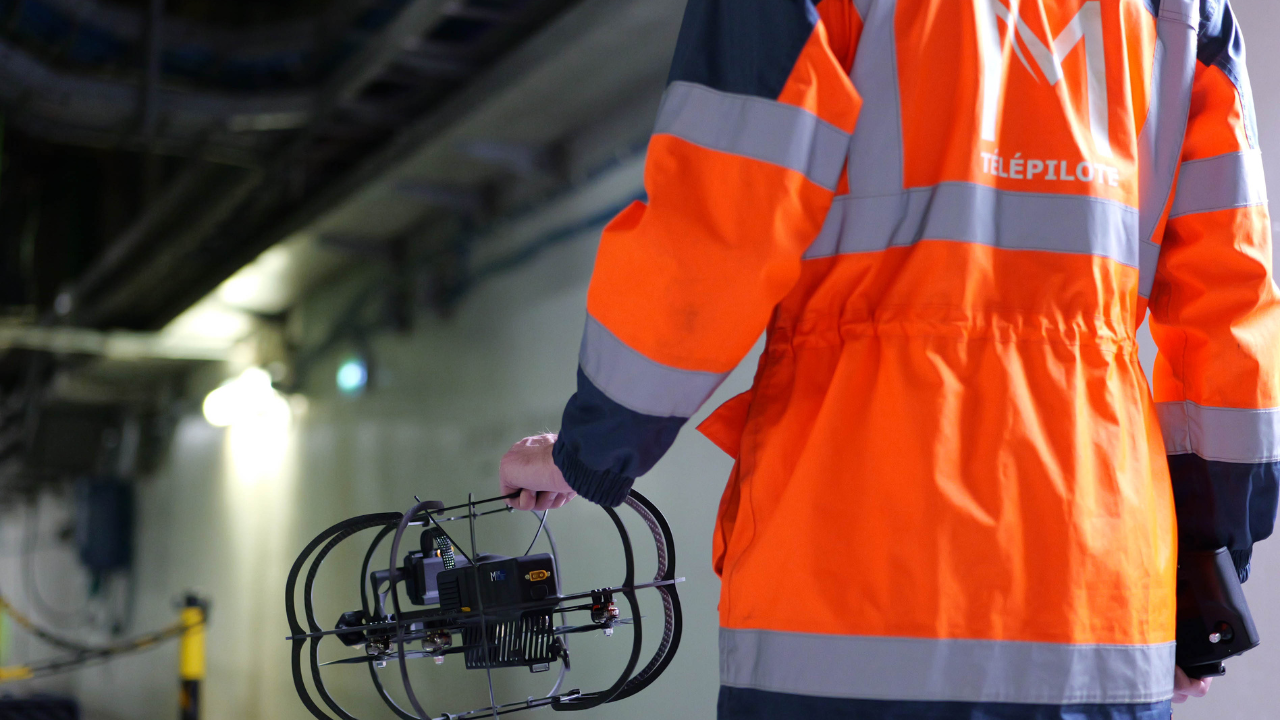
Industrial environments have always exposed operators to complex and sometimes dangerous working conditions. Confined spaces, working at height, hazardous atmospheres, and irradiated areas are part of everyday life in many sectors, including energy, chemicals, nuclear power, and large infrastructure maintenance. In these contexts, worker safety has always been a major challenge, with significant logistical and human resources deployed to limit risks.
At a time when inspection drones, autonomous robots and advanced analytics technologies are becoming more widespread, a crucial question arises: is direct human exposure to these environments still justified? Or is this a case of cultural inertia in the face of rapid advances in industrial technology?
The limits and risks of human exposure
Historically, visual inspection and control operations relied on human presence on site. This approach, although well-controlled, carries significant risks. Working in confined spaces exposes operators to falls, oxygen deprivation, and hazardous substances. In the nuclear and chemical industries, exposure to radiation and toxic substances requires extremely strict procedures, increasing the complexity and duration of operations.
Working at height, which is often necessary to inspect industrial structures or large installations, involves the use of scaffolding, aerial work platforms, or lifting platforms. Although these devices are safe, they remain costly, cumbersome to deploy, and increase the risk of falls or accidents. Logistical and human constraints also result in longer downtime and complex planning, impacting site productivity.
Beyond safety, human exposure generates high indirect costs. Personal protective equipment, lockout procedures, production stoppages, and team training represent significant expenses for industrial companies. In some contexts, these costs and risks can exceed the added value of a manual inspection.
These limitations therefore call into question the relevance of maintaining practices inherited from a time when technological alternatives were limited and the digitization of inspections was not yet envisaged.
The contribution of drones and robots
The inspection drones and autonomous robots now offer a concrete and effective solution to industrial safety and performance issues. Designed to operate in confined, difficult-to-access, or hazardous environments, these systems enable the collection of accurate data without exposing operators to physical risks.
These drones can navigate with precision in confined spaces, such as ducts, tanks, silos, or chimneys, and are often equipped with high-definition inspection cameras capable of producing images and videos that can be used for detailed ITV analyses. Ground-based or wired robots, on the other hand, perform long, continuous inspections of underground networks or complex industrial structures.
One of the main operational advantages is the significant reduction in response times. An inspection that used to take several days and require the deployment of an entire team can now be carried out in a matter of hours by a drone. The increased responsiveness is particularly crucial during planned but critical interventions, such as nuclear reactor shutdowns, chemical plant maintenance, or the inspection of sensitive logistics infrastructure.
The solutions developed by Multinnov illustrate this technological transition. Designed for intensive industrial use, these drones and robots combine robustness, stability, precision, and data reliability. They can be integrated into modern inspection processes focused on safety, efficiency, and economy, while allowing humans to be repositioned to perform tasks with higher added value, such as data analysis and preventive maintenance planning.
Humans versus machines: necessity or ethical choice
Despite technological advances, human intervention remains essential in certain contexts. Human judgment is still crucial for interpreting collected data, contextualizing observations, and making complex decisions. No autonomous system can yet fully replace the expertise and responsiveness of an experienced operator when it comes to making critical decisions or managing unforeseen situations.
Ethical and legal questions also arise. The complete delegation of certain decisions to autonomous systems raises issues of responsibility, traceability, and regulatory compliance. For example, in the nuclear or chemical industries, automated control cannot replace legal requirements that mandate human validation for certain diagnostics or safety reports.
The challenge is therefore not to eliminate humans, but to reduce their unnecessary exposure to risks by using technology to protect them and improve the efficiency of inspections. In this context, human exposure remains justified when the added value of human judgment is real and no reliable technological alternative exists.
On the other hand, maintaining a human presence in dangerous areas simply out of habit, cultural inertia, or ignorance of the tools available is becoming difficult to justify.
In the age of drones, robots, and advanced inspection technologies, the question of human exposure is no longer one of replacement, but of strategic relevance. Autonomous systems now make it possible to observe, intervene, and collect data with a high level of safety and precision.
Multinnov exemplifies this transformation by offering solutions that make industrial inspections safer while optimizing costs, reliability, and operational efficiency. People continue to play a central role, but in a better-protected environment focused on decision-making and critical analysis.
The complementary relationship between humans and machines is thus becoming the new industrial paradigm, where human exposure is no longer a default necessity, but an informed and strategic choice. This approach paves the way for safer, more productive, and technologically advanced work environments, while complying with the regulatory and ethical constraints of high-risk industries.