
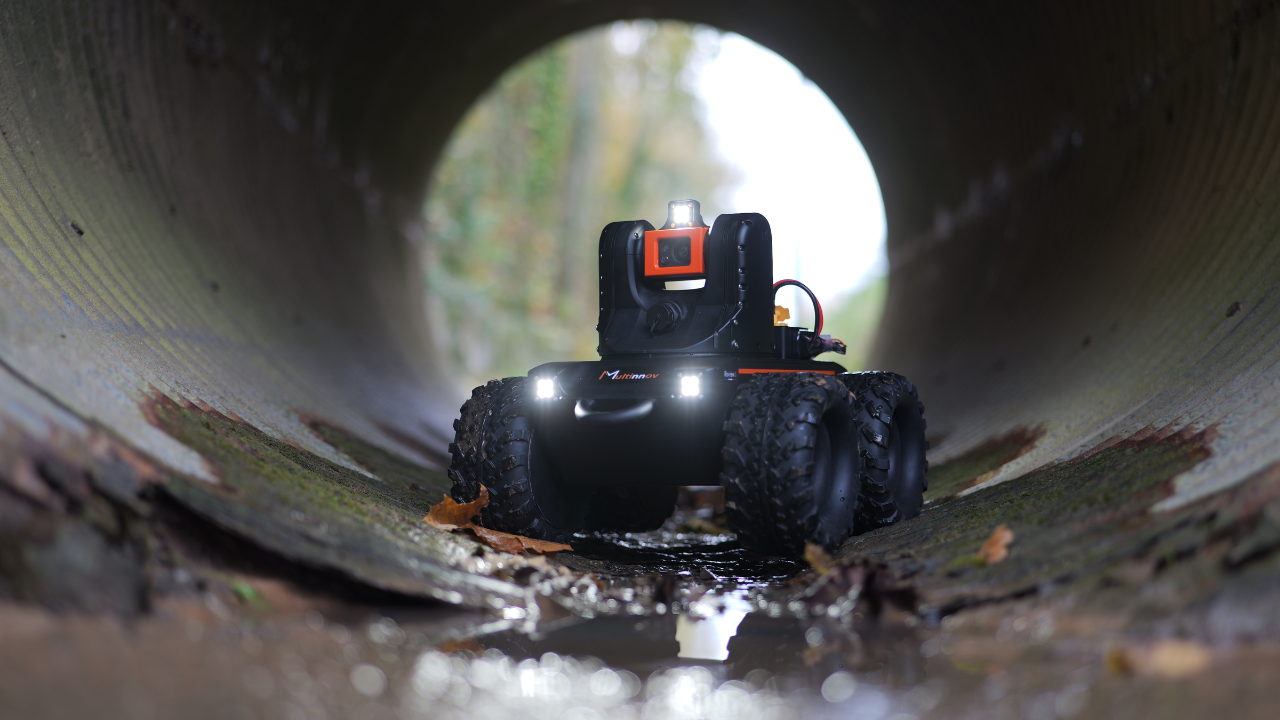
Pipe inspection has become an essential step in ensuring the durability, performance, and safety of industrial and drinking water sanitation networks. Faced with frequent problems such as leaks, blockages, infiltrations, or structural damage, traditional diagnostic methods are often time-consuming, costly, and invasive. Today,pipe camera inspection is the most reliable solution for obtaining a complete and accurate internal view of pipes without destructive work or major service interruptions.
Why use a camera to inspect pipes?
Video inspection of pipes—often referred to as CCTV inspection —allows for the rapid identification of internal anomalies that would not be visible from the outside or by other non-invasive methods. This technique involves inserting an inspection camera directly into the pipes to examine the condition of the structure, identify defects, and precisely locate problem areas without digging or interrupting service.
This allows:
- Accurate detection of anomalies: cracks, collapses, leaks, roots, debris, or obstructions.
- Non-destructive analysis: no trenches or destruction of infrastructure.
- Saves time and money: quickly identifies areas requiring repair and enables efficient planning of interventions.
Camera inspection has become a standard step prior to any rehabilitation or preventive maintenance work, or even during regulatory diagnostics in accordance with current standards (e.g., standard NF EN 13508-2 for sanitation).
The essential criteria for choosing the right equipment
Choosing the right pipe inspection camera is no trivial matter. Poorly calibrated equipment can produce unreliable results, take time to deploy, or limit access to certain sections of the network. Here are the main criteria to consider:
Inspection camera quality
Video resolution and lighting capability are crucial elements. A high-definition camera, combined with powerful LED lighting, allows for detailed viewing, even in dark or cluttered segments.
Mobility and range
For extensive or deep networks, the length of the tool (cable or mobile robot) influences the ability to reach problem areas. Motorized or robotic systems offer increased mobility compared to rigid probe cameras.
Adaptability to pipe diameter
The cameras must be compatible with the different diameters found in the network: from small connections to large collectors. Motorized pan/tilt heads provide more comprehensive 360° coverage.
Robustness and durability
Since cameras are often used in wet, muddy, or corrosive environments, it is important to choose systems that are designed to withstand water, pressure, impact, and temperature variations.
Ergonomics and control interface
An easy-to-use system with an intuitive interface reduces training time and increases operational efficiency, especially when integrated with reporting and archiving software.
Multinnov, for efficient camera inspections
In a professional setting, choosing a robust, high-performance inspection camera is essential. Among the innovative solutions available, Multinnov has been offering advanced inspection robot technologies for several years, notably with devices such as the Roview2, a wireless television inspection robot that perfectly illustrates the advantages of modern tools.
Technological innovation
The robot Roview2 eliminates the constraints associated with conventional cables and offers great freedom of movement in confined spaces, while ensuring excellent image quality and reliable data collection.
Suitable for confined spaces
Its design allows it to operate in damp, narrow, or partially submerged environments, which are typical of underground sewer systems.
Increased efficiency
Compared to traditional solutions, inspection robots such as the Roview2 enable faster, safer, and more accurate inspections, while reducing the physical strain on operators.
Enhanced safety
Robotic technology prevents technicians from being directly exposed to hazardous environments, thereby improving working conditions and compliance with on-site safety standards.
The pipe inspection camera has become an indispensable tool for professionals concerned with ensuring the reliability, safety, and durability of their networks. Thanks to television inspection (ITV), it is possible to accurately diagnose internal defects in pipes before they cause structural damage or major malfunctions.
To make the right choice in 2026, operators must consider image quality, access capacity, equipment robustness, and compatibility with different pipe diameters. The integration of advanced solutions such as those from Multinnov, combining innovation, robotization, and operational efficiency, increases diagnostic accuracy while saving time and controlling costs.
By adopting the right inspection camera, professionals can not only reduce dangerous manual interventions, but also optimize maintenance, plan repairs accurately, and ensure sustainable management of sewer networks.