
In many technical sectors, certain areas remain difficult, if not impossible, to inspect directly. Buried pipes, utility ducts, wall cavities, and enclosed industrial infrastructure are all environments where human access is limited. However, the condition of these structures must be regularly monitored to ensure the safety of the facilities and prevent failures.
It is precisely in this context that inspection cameras play a vital role. Thanks to recent advances in visual inspection technology, it is now possible to explore these complex spaces with precision, without the need for disassembly or invasive procedures.
In the construction, industrial, and technical maintenance sectors, these tools now make it possible to see what is invisible, while improving the efficiency and safety of inspection operations.
The Challenges of Inspection in Complex Environments
Modern infrastructure often consists of technical systems that are difficult to access. Water pipes, sewer systems, industrial piping, and utility ducts are generally concealed within enclosed structures or buried underground.
Inspecting these facilities without the proper equipment can be particularly challenging. In some cases, it may be necessary to dismantle structures, open up walls, or excavate utility lines, which entails significant costs and poses a risk to the integrity of the facilities.
Camera inspection is therefore an effective solution for inspecting these areas without the need for major work. In particular, it can detect:
- cracks or damage in the pipes
- blockages in the utility systems
- water seepage or leaks
- structural defects in certain industrial facilities
This approach is part of a preventive maintenance strategy. By identifying issues as soon as they arise, professionals can take swift action and avoid more costly repairs.
Operator safety is also a major concern. In confined spaces, human access can pose significant risks. The use of visual inspection systems therefore helps limit crew exposure while providing accurate information on the condition of the infrastructure.
Camera inspection technologies
Camera inspection systems have undergone significant advancements in recent years. Modern systems combine multiple technologies to provide accurate, actionable images in challenging environments.
The inspection camera is, of course, the central component of the system. Recent models are capable of capturing high-resolution images, making it possible to identify defects that are sometimes invisible to the naked eye.
These cameras are often integrated into mobile systems or inspection robots capable of moving through pipes or technical infrastructure. This type of solution is particularly useful for inspecting pipeline networks or complex industrial facilities.
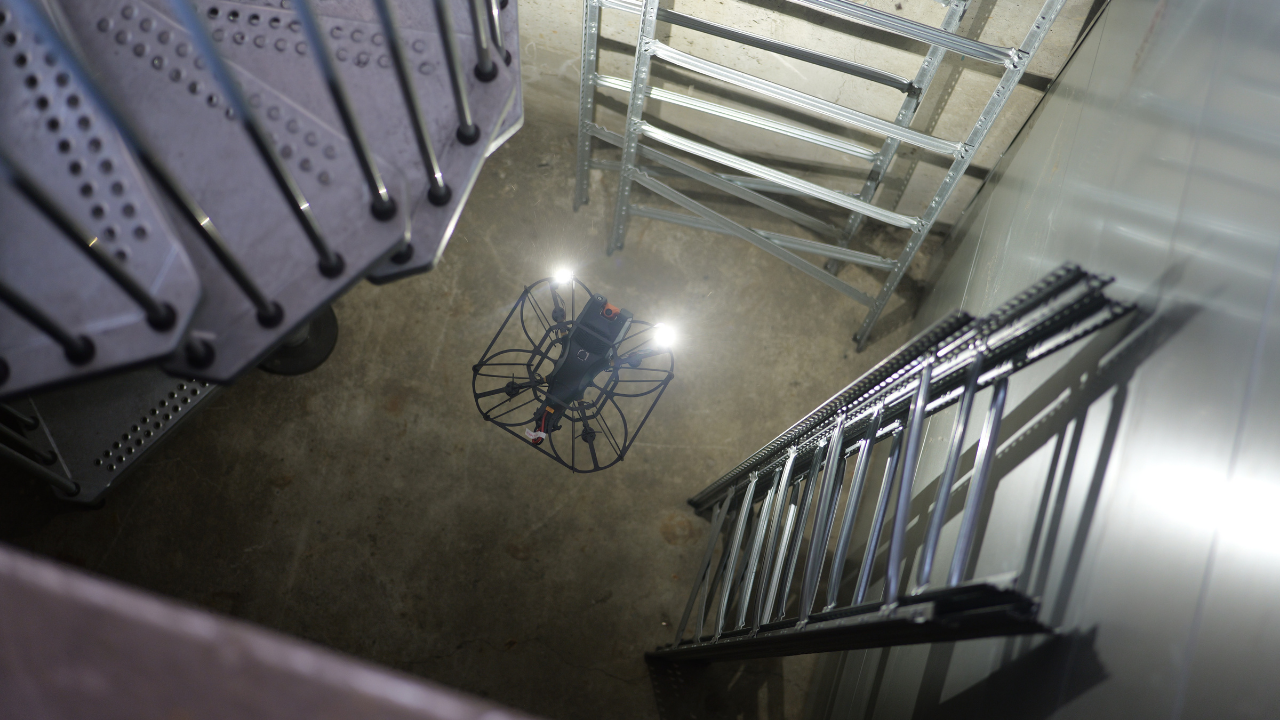
In some cases, visual inspection systems are also equipped with powerful LED lights to ensure good visibility in dark or confined spaces.
Inspection technologies may also include:
- camera rotation systems to explore the entire pipeline
- flexible cables that allow access to hard-to-reach areas
- video recording devices to review inspections after service calls
Some more advanced inspection solutions can also be combined with drones or specialized robots capable of operating in environments that are particularly difficult to access.
Innovative companies such as Multinnov are developing technologies designed to improve the efficiency of inspections in complex environments by combining robotics withadvanced visual inspection systems.
Applications and best practices
Camera inspection is now used in many professional sectors. Its versatility makes it a valuable tool for diagnostic and maintenance operations.
In the construction industry, these cameras are frequently used to inspect drainage systems, detect leaks, or check the condition of pipes without having to open up the structures.
Inindustry, visual inspection systems are used to monitor the condition of technical installations, pipelines, and production equipment. These inspections are particularly useful for anticipating failures and planning maintenance operations.
Underground infrastructure is another major area of application. Inspecting pipelines, sewer systems, or utility tunnels often requires the use of specialized equipment capable of operating in confined spaces.
To obtain reliable results, several best practices must be followed:
- Choose a camera that is suitable for the diameter and length of the pipes
- prioritize robust systems designed for industrial environments
- ensure good lighting quality to improve visibility
- record inspections to facilitate analysis and traceability
The choice of equipment therefore depends directly on the type of infrastructure to be inspected and the technical constraints of the site.
Camera inspection has become an indispensable tool for exploring complex and hard-to-reach environments. By allowing the interior of pipes, networks, or technical infrastructure to be inspected without invasive procedures, it helps improve the safety and efficiency of maintenance operations.
Thanks to recent technological advances, these systems now provide accurate and reliable visual inspection, capable of quickly detecting anomalies in confined spaces.
In an environment where failure prevention and cost optimization have become essential, inspection solutions developed by innovative companies such as Multinnov are playing a key role in transforming industrial practices.
Inspection cameras thus enable professionals to better understand the actual condition of their facilities and take action at the right time, before problems become critical.