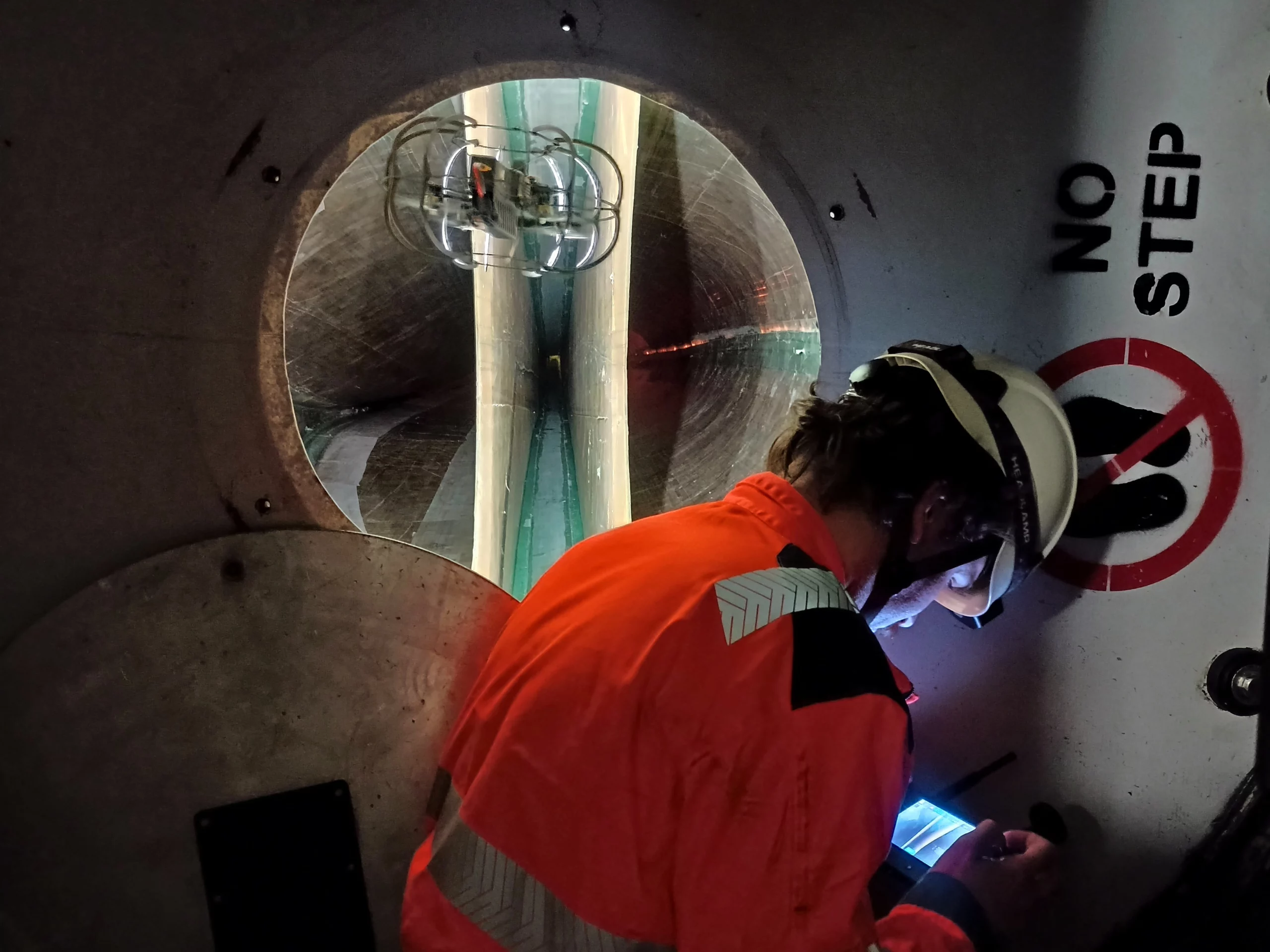

In the wind energy sector, the performance and reliability of installations depend largely on the condition of the blades. Subject to significant mechanical stress, erosion, and structural fatigue, they require regular and rigorous inspections. While traditional visual inspections have long proven their worth, they are now reaching their limits, particularly when inspections must be carried out in confined or difficult-to-access spaces.
The rise of indoor inspection drones, developed by players such as Multinnov, opens up new possibilities for inspecting wind turbine blades with greater safety, precision, and efficiency.
The challenges of inspecting wind turbine blades
Wind turbine blades are long, complex, and often hollow structures. They are inspected to detect defects such as cracks, delamination, bonding defects, or signs of internal wear. If these anomalies are not identified in time, they can impact the performance of the wind turbine and generate high maintenance costs.
Traditional inspection methods rely mainly on human intervention, sometimes at height or in confined spaces. Inside the blades, access is narrow and restrictive, exposing operators to significant physical risks. These operations also require heavy logistics and prolonged shutdowns of facilities, which reduces equipment availability.
During the manufacturing, testing, and maintenance phases, internal inspections must be frequent and precise. Safety, time, and cost constraints are therefore pushing wind power operators and manufacturers to seek solutions that are better suited to the sector's current requirements.
The contribution of indoor drones to blade inspection
Indoor visual inspection drones are a particularly relevant technological response to these challenges. Designed to operate in confined spaces, they are capable of moving inside blades or maintenance facilities without requiring direct human intervention.
Equipped with high-resolution inspection cameras, these drones collect detailed images and videos that can be used for accurate ITV analyses. Their stability and maneuverability allow them to observe hard-to-reach areas while maintaining a high level of data quality.
One of the major benefits of this approach is that it eliminates human exposure to confined spaces and hazardous conditions. Operators remain at a distance, controlling the inspection robot from a safe environment. This reduction in human risk is fully in line with current industrial safety requirements.
The solutions developed by Multinnov, such as the Stereo2 indoor drones Stereo2 or Roview3, illustrate this evolution. Designed for industrial use, they combine robustness, precision, and adaptability to complex environments, while facilitating rapid deployment of inspections.
More reliable inspections for optimized maintenance
Beyond safety, inspecting wind turbine blades using indoor drones directly contributes to more efficient and targeted maintenance. The quality of the visual data collected makes it possible to identify defects more quickly, monitor their progress, and anticipate maintenance operations.
This approach significantly reduces facility downtime by limiting preparation and access phases. Inspections can be carried out more frequently without causing prolonged equipment downtime, which improves the overall availability of wind turbines.
Economically speaking, the use of drones and inspection robots limits the need for costly logistics and optimizes the resources mobilized. It is also part of a preventive maintenance approach, avoiding costly repairs due to defects that were not detected in time.
By integrating indoor drone inspections into their processes, wind power operators are enhancing the reliability of their facilities while meeting growing demands for safety, efficiency, and sustainability.
Inspecting wind turbine blades is a strategic challenge for the renewable energy sector. Given the limitations of traditional methods, indoor visual inspection drones are emerging as an innovative and operational solution. By improving operator safety, reducing downtime, and providing high-quality data, they are transforming inspection and maintenance practices.
Thanks to its technological solutions dedicated to confined environments, Multinnov is supporting this evolution by offering reliable tools tailored to the industrial requirements of modern wind power.