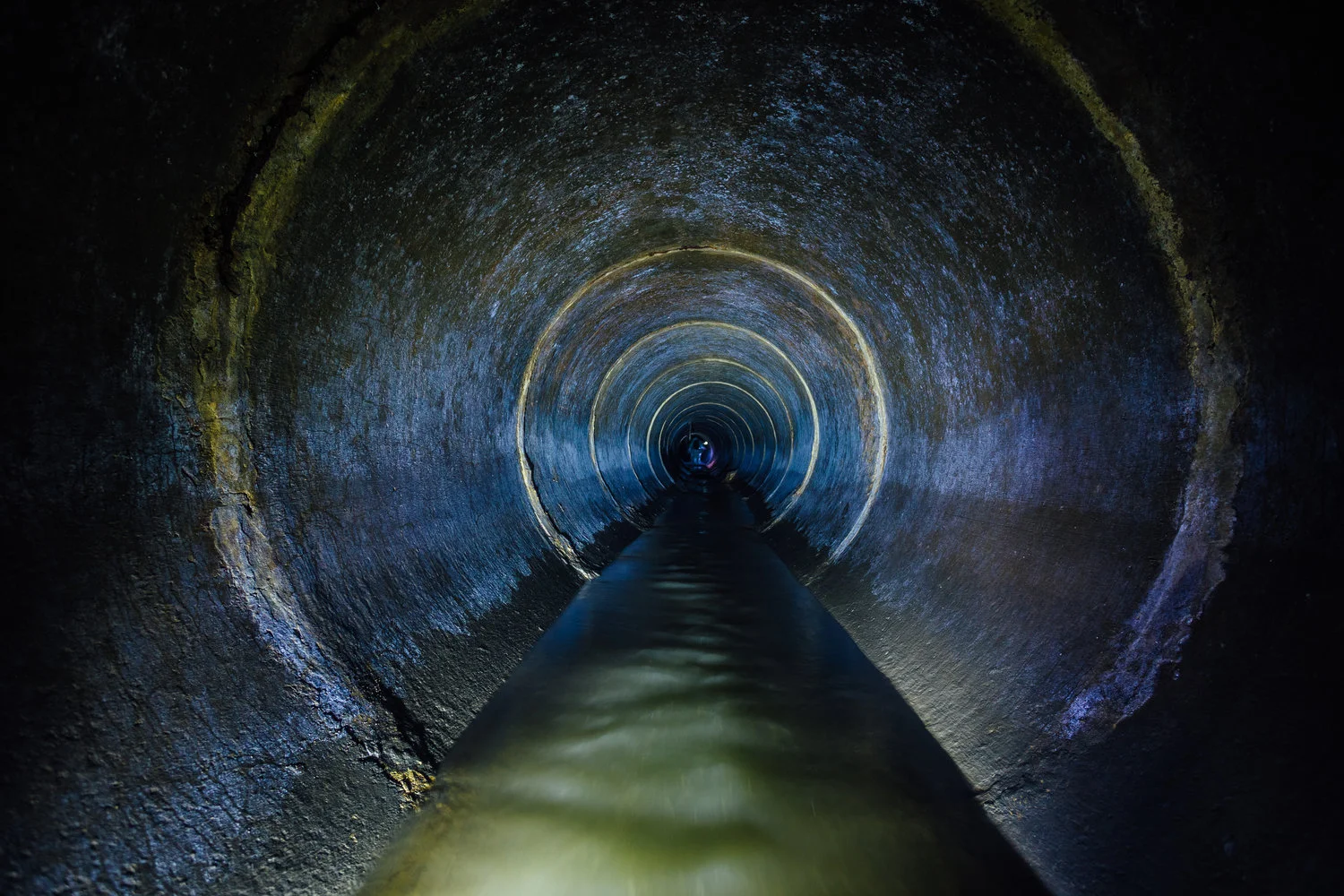
Sewage systems are essential to the functioning of communities and industrial sites. They collect wastewater, transport it to treatment plants, and play a direct role in protecting the environment. In France, the public sewage system relies on public pipe networks designed to transport wastewater to a treatment plant before it is discharged into the natural environment.
However, this infrastructure often remains hidden until a problem arises: blockages, leaks, cracks, subsidence, or poor drainage.
At Multinnov, we developvisual inspection solutions to help professionals better understand the actual condition of their networks. With our TV inspection robots and drones, we aim to make diagnostics faster, safer, and more actionable in the field.
The challenges of wastewater network inspection
Inspecting a sewer or pipe isn’t just about checking that a system is working. It’s about anticipating problems before they become costly.
A poorly secured network can lead to:
- repeated blockages;
- water leaks;
- leaks onto the floor;
- gradual deterioration of the pipes;
- more extensive emergency response operations.
Sewer systems are subject to numerous stresses: constant moisture, buildup, corrosion, tree roots, ground movement, and aging materials. A localized problem can quickly disrupt the entire system.
Regular inspections therefore make it possible to shift from a corrective approach to a preventive one.
Instead of responding only when an incident occurs, operators can prioritize work, document the condition of the network, and optimize their maintenance budgets. This is a key driverof efficiency andcost savings for local governments, industrial companies, and specialized firms.
Safety is also a key concern. Sewers and underground utility networks are confined spaces. Human access to these areas is restricted and requires strict procedures. Reducing operators’ direct exposure is therefore a major challenge.
Inspection methods and technologies
Camera inspection, or CCTV, is now the standard method for examining the interior of pipelines without the need for invasive work. It involves inserting an inspection camera into the pipe to view its internal condition.
This approach makes it possible to quickly identify:
- cracks and breaks;
- deposits or blockages;
- leaks;
- roots;
- deformations;
- connection defects;
- signs of corrosion.
The images collected are then used to make a diagnosis and guide cleaning, repair, or restoration efforts.
The technical framework for visual inspection is also well-defined. The NF EN 13508-2+A1 standard covers the investigation and assessment of drainage and sewer systems outside buildings, including a coding system for visual inspection.
In the field, several technologies can be used depending on the needs:
- advanced cameras for small pipes;
- motorized robots for lengthy or complex inspections;
- photo and video recording systems;
- measurement interfaces for tracking distance traveled;
- drones or specialized robots designed for hard-to-reach environments.
At Multinnov, we are keeping pace with this evolution by offering solutions designed to address the real-world challenges faced by operators.
Our solutions for a high-performance, sustainable network
For sewer system inspections, our flagship solution is the Roview3. This wireless video inspection robot was designed to facilitate the inspection of pipes and sewer systems.
The Roview3 combines several features designed for off-road use:
- wireless control;
- 4K30i camera;
- 16,000-lumen lighting;
- battery life of more than two hours;
- completely watertight;
- ability to roll and float;
- real-time photo and video capture.
Its wireless control reduces the logistical requirements compared to some traditional methods. The operator monitors the inspection in real time and maintains seamless control over the robot.
Complete watertightness is particularly important for wet systems. The components are sealed to minimize the risk of water, dust, or mud infiltration, allowing the system to operate under demanding conditions.
The Roview3’s buoyancy further enhances its versatility. Unlike heavier carts, it can both roll and float, allowing it to adapt to on-site conditions when pipes are partially filled.
For farmers, the benefits are tangible.
The Roview3 provides a clear view of the inside of pipes, identifies anomalies, and documents each inspection. The data collected facilitates report writing, comparisons between inspections, and long-term monitoring.
Our solutions aren't limited to Roview3. We're also developing the Stereo3, an indoor inspection drone designed for more open confined spaces, such as tanks, tunnels, or enclosed industrial structures. Multinnov thus offers two complementary solutions: the Roview3 for networks and pipelines, and the Stereo3 for indoor inspection in confined environments.
This complementarity allows professionals to tailor their inspection methods to each specific environment.
Inspecting sewers and sewer systems has become a key tool for ensuring the performance, durability, and compliance of infrastructure. By identifying cracks, blockages, leaks, or structural defects before they become critical, operators can better plan their maintenance work and reduce emergency costs.
At Multinnov, we designvisual inspection solutions tailored to real-world conditions. With the Roview3, we offer a reliable, waterproof, wireless, and floatable tool designed to modernize the inspection of sewer networks.
Our goal is simple: to help professionals inspect faster, more reliably, and with more accurate data, in order to build smarter maintenance practices and more sustainable networks.