Maintaining and monitoring wastewater networks represents a major challenge for local authorities and infrastructure managers. Underground pipes, sewers, retention basins and treatment plants are essential structures, but often invisible and difficult to access. Their condition has a direct impact on public safety, environmental protection and the efficiency of urban services.
Traditionally, inspections of these structures have relied on manual intervention or the use of wired ITV carts. Although reliable, these methods are costly, slow and sometimes dangerous for operators exposed to unhealthy or confined environments.
The emergence of specialized drones and innovative inspection robots, such as those developed by Multinnov with its Roview2, now offer a safer, faster and more cost-effective alternative. These technological solutions are revolutionizing the way sewer systems are inspected and maintained.
The challenges of wastewater network inspection
Ensuring infrastructure safety and compliance
Sewerage systems carry huge volumes of wastewater every day. Undetected cracks, blockages or structural deterioration can have serious consequences: urban flooding, environmental pollution and health risks. Regular inspections enable us to anticipate and intervene before a problem becomes critical.
Detecting defects invisible to the naked eye
Common faults identified during diagnostics include :
- Cracks and microcracks in the walls, warning of subsidence.
- Deposits and sediments that reduce the useful diameter of pipes and disrupt flow.
- Blockages caused by roots, foreign objects or greasy deposits.
- Structural damage caused by ageing materials or chemical aggression.
Only a thorough visual inspection can identify these weak signals, which are essential for organizing preventive maintenance.
The limits of traditional methods
Historically, inspections were based on :
- Manual descents: operators sent into the networks to visually check the walls, an extremely risky method (toxic atmospheres, lack of oxygen, risk of collapse).
- Wired cameras or ITV carts: inserted into pipes, they offer reliable inspection, but with limited mobility and speed. Installation is time-consuming, and very narrow or winding areas remain difficult to access.
These constraints generate high costs, prolonged downtime and sometimes partial inspection coverage.
Multinnov and its innovative sanitation tools
Innovation for safety and efficiency
Aware of the limitations of conventional methods, Multinnov has developed technological solutions specially designed for confined environments. Our aim is to provide local authorities and manufacturers with reliable, easy-to-handle, high-performance tools to make inspection easier, faster and safer.
Roview2: an inspection robot for wastewater networks
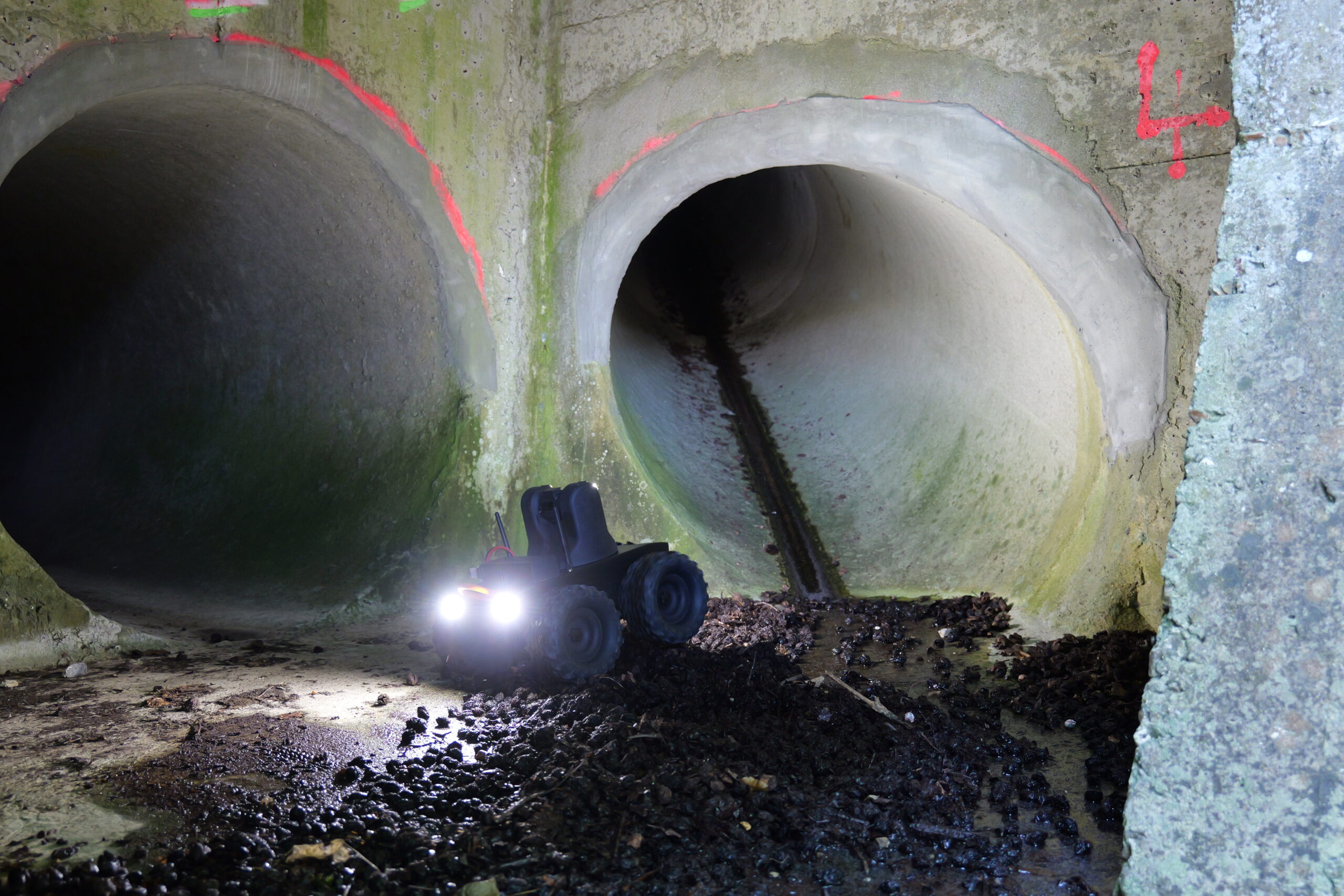
The Roview2developed by Multinnov, represents a major advance in television inspection (TVI). Designed as a mobile inspection robot, it is distinguished by :
- Maneuverability: capable of moving through narrow, partially water-filled or winding networks.
- High-definition sensors and cameras: for high-precision visual inspection, with real-time transmission.
- Safety: no operator is exposed to the risks of confined environments.
- Its efficiency: reduced installation time, rapid intervention and immediately usable data.
Comparison with traditional ITV trucks
Where conventional ITV forklifts require heavy logistics and are limited to the most accessible networks, the Roview2 adapts to more complex environments. Its compactness and autonomy enable it to go where other solutions fail, while considerably reducing the downtime required for inspection.
Concrete applications
The Roview2 can be used in a variety of contexts:
- Inspection of urban pipes: prevention of blockages and leaks.
- Monitoring of sewers and collectors: detection of deposits or intrusions.
- Monitoring retention basins and hydraulic infrastructures.
- Maintenance of treatment plants: checking the condition of internal networks.
By enabling precise and secure inspection, these tools give managers a clear vision of the real state of their infrastructures.
Benefits and prospects for network operators
Better work planning
Thanks to the data collected by the Roview2 and Multinnovsystems, managers have a precise map of network conditions. This enables them to plan work according to actual emergencies, prioritize work and optimize budget allocation.
Lower maintenance costs
By switching from curative maintenance (intervention after a breakdown) to preventive maintenance (intervention before a breakdown), local authorities save on major repairs and avoid costly service interruptions.
Increased safety for operators
As human intervention in sewer networks is limited, the risk of accidents linked to toxic gases, darkness or confined spaces is drastically reduced. The robot takes over, guaranteeing reliable inspection without endangering the health of the teams.
A sustainable and innovative perspective
The use of technologies such as those proposed by Multinnov is part of a sustainable approach:
- Reduced environmental impact (less heavy intervention).
- Continuous improvement thanks to ever more powerful data processing software.
- Preparing to integrate AI for automatic image analysis and predictive anomaly detection.
These innovations transform wastewater network inspection into a strategic lever for intelligent infrastructure management.
The inspection of wastewater systems is a crucial issue for safety, public health and infrastructure sustainability. While traditional methods have long been the norm, they are now showing their limitations in terms of cost, safety and efficiency.
With solutions such as Roview2 from Multinnovmanagers now have a powerful tool with which to optimize their operations. Capable of operating in confined environments and providing precise data in real time, this inspection robot is revolutionizing thewastewater treatment sector.
By combining innovation, efficiency and safety, Multinnov is a key player in the modernization of industrial and urban inspections. For local authorities and manufacturers alike, investing in these technologies means ensuring the long-term future of their infrastructures and meeting the challenges of tomorrow.