
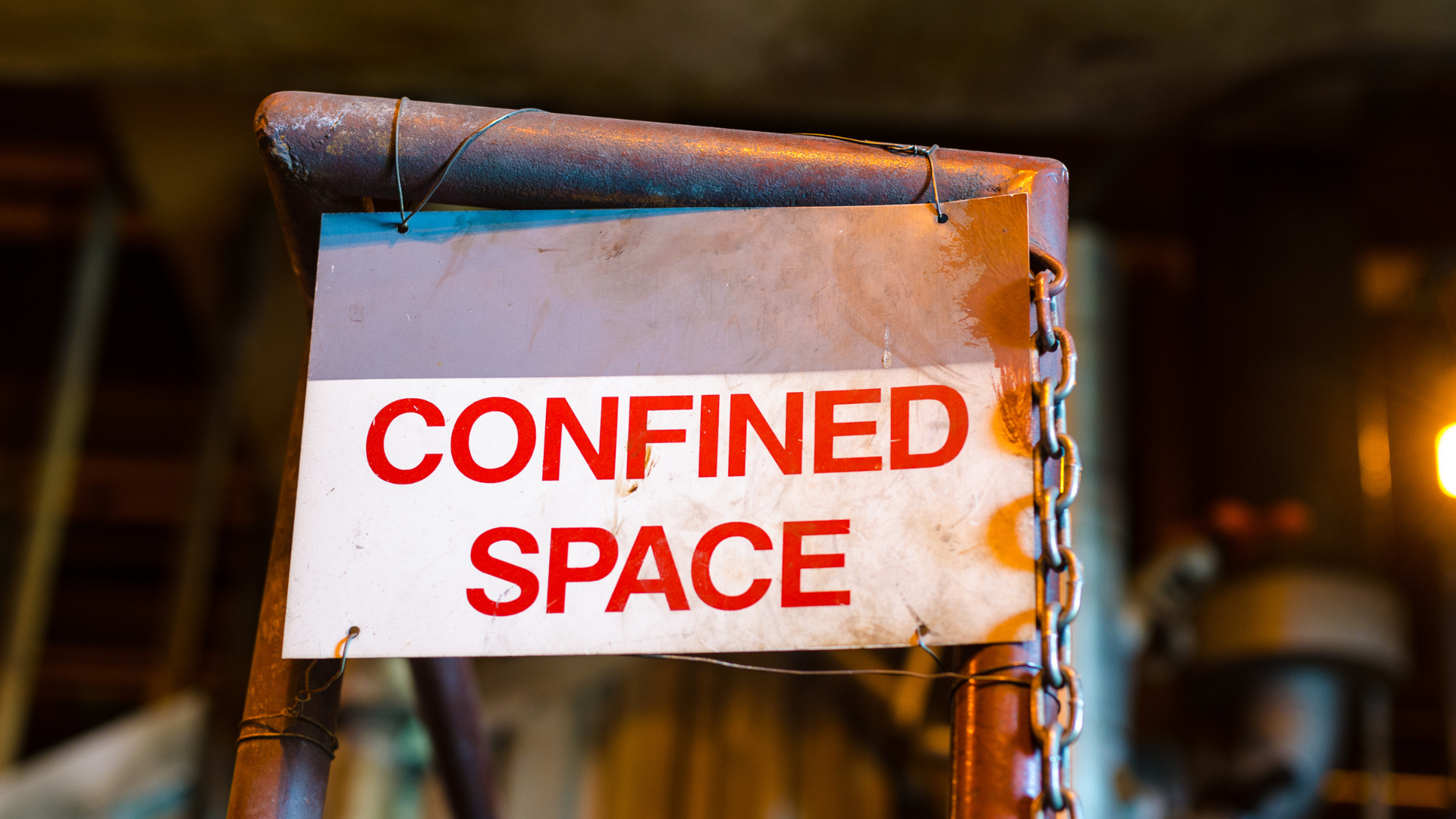
In many industrial sectors, inspecting confined spaces remains a delicate operation. Whether it's tanks, silos, tunnels, or pipelines, these environments present significant challenges: limited access, potentially hazardous atmospheres, and reduced visibility. For a long time, their inspection relied almost exclusively on direct human intervention, governed by cumbersome and costly safety protocols. Today, the advent of inspection drones, and in particular indoor drones designed to operate without GPS, is profoundly changing the game. By allowing these areas to be inspected without exposing operators, they provide a concrete response to the challenges of safety, efficiency, and reliability of diagnostics.
Risks associated with confined space inspections
Traditional inspections in confined spaces expose operators to multiple risks, which are often underestimated. The first danger concerns air quality. In these enclosed spaces, oxygen levels may be insufficient, while toxic or flammable gases may accumulate. A simple change in atmospheric conditions can lead to loss of consciousness or even a serious accident.
In addition to these risks, there are physical constraints. Moving around in confined, damp, or cluttered environments greatly increases the likelihood of falling, slipping, or becoming trapped. Some inspections also require working at height or on unstable structures, which further increases the danger for workers.
From a regulatory standpoint, confined spaces require strict procedures: entry permits, continuous monitoring, emergency response teams on standby, and specific protective equipment. These requirements, while necessary, significantly increase response times and mobilize significant resources.
Finally, the human and organizational impact is far from negligible. A conventional inspection often involves several operators, prolonged downtime, and complex planning. In this context, each intervention becomes a compromise between safety, efficiency, and operational costs.
The role of drones in inspecting confined spaces
Faced with these constraints, indoor inspection drones have gradually established themselves as a credible and effective alternative. Designed to operate in complex environments, they are capable of functioning without a GPS signal, in total darkness, and in close proximity to obstacles.
Their main advantage lies in their ability to replace direct human intervention. Thanks to their compact size and high maneuverability, these drones can penetrate areas that are difficult to access: narrow ducts, deep tanks, technical galleries, or pipes. The operator remains at a safe distance while maintaining a complete view of the area being inspected.
Technologically speaking, these drones are equipped with high-resolution cameras combined with powerful lighting systems, enabling them to capture accurate images even in dark or dusty environments. Some models also feature advanced sensors, such as stereoscopic vision or inertial sensors, ensuring reliable stabilization and smooth navigation in complex confined spaces.
Another major advantage is the simplification of operations. Using a drone eliminates the need for scaffolding, lifting platforms, or temporary ventilation systems. Inspections can be carried out more quickly, with a significantly reduced logistical impact.
The benefits of drones for safety and inspection performance
The adoption of drones for inspection in confined spaces brings concrete benefits on several levels, starting with operator safety. By eliminating the need to physically enter hazardous environments, drones significantly reduce accidents related to falls, poisoning, or lack of oxygen. This approach is fully in line with HSE initiatives aimed at limiting human exposure to dangerous situations.
In operational terms, the time savings are significant. Whereas a traditional inspection could take several days of preparation and work, a drone inspection can often be completed in a matter of hours. This speed reduces facility downtime and speeds up decision-making in the event of a detected anomaly.
The economic aspect is also a compelling argument. Although the initial investment in a drone may seem significant, the elimination of heavy equipment, the reduction in personnel required, and the decrease in business interruptions quickly translate into an overall reduction in inspection costs.
The quality of the data collected is another major advantage. Drones provide usable images and videos, facilitating defect analysis, detailed reporting, and monitoring of the condition of facilities over time. This data can be integrated into preventive maintenance strategies, thereby improving the reliability and sustainability of infrastructure.
Finally, the versatility of inspection drones allows them to be used on a wide variety of sites: sewerage networks, industrial facilities, underground structures, and tall structures. This flexibility makes them particularly well suited to the needs of professionals working in complex and changing environments.
In a context where operator safety has become a top priority, drones for inspecting confined spaces are emerging as a modern and effective solution. By eliminating human exposure to hazardous environments, they make it possible to inspect areas that were previously difficult or even impossible to analyze under optimal conditions.
Beyond safety, these technologies offer real gains in terms of speed, accuracy, and cost-effectiveness. They help improve the quality of diagnostics, reduce heavy interventions, and optimize the maintenance of networks and industrial facilities.
For inspection professionals, integrating the drone into their practices means adopting a safer, more efficient approach that is better suited to the current requirements of confined spaces. This is a logical development, at the crossroads of technological innovation and risk prevention.