In industry, visual inspection is a key step in ensuring the safety of facilities, continuity of production, and regulatory compliance. However, for a long time, these inspections relied almost exclusively on human intervention, which was often complex, time-consuming, and risky. Confined spaces, working at height, hazardous atmospheres, and costly production stoppages: the constraints are numerous.
Faced with these challenges, the rise of industrial inspection drones marks a major development. Sending a drone rather than an operator is no longer a marginal option, but a strategic decision adopted by more and more industrial players.
The limitations of traditional industrial inspections
Conventional inspection methods often require direct human presence in confined environments. Tanks, silos, chimneys, technical galleries, and underground networks are all areas where accessibility is limited and risks are high.
Among the main hazards are dangerous atmospheres: lack of oxygen, presence of toxic or flammable gases, airborne dust. Added to this are mechanical risks related to falls, unstable structures, or moving around in confined spaces.
From an organizational standpoint, these inspections require cumbersome protocols: work permits, lockouts, equipment safety measures, constant monitoring, and sometimes even a complete halt to production. These constraints have a direct impact on deadlines and operating costs.
Finally, despite all precautions, the human factor remains present. Fatigue, stress, or difficult conditions can limit the accuracy of observations and the quality of the data collected.
Drone inspection: a safer and more efficient approach
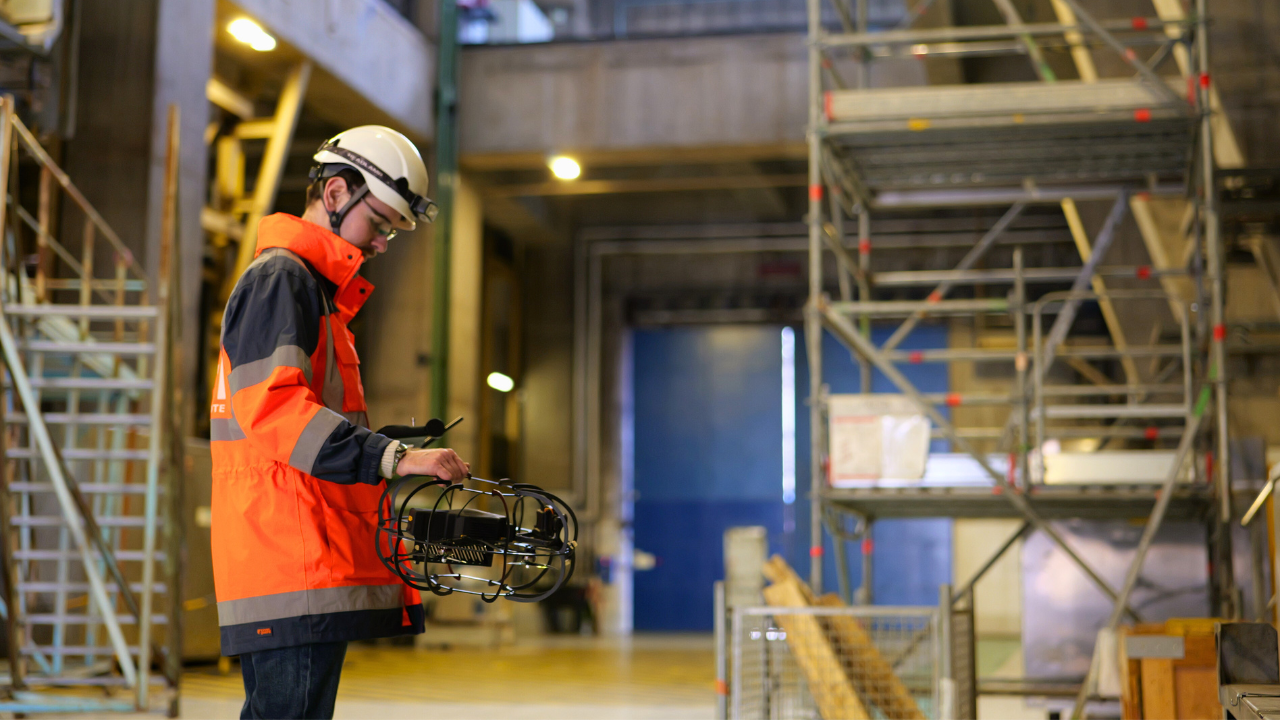
The use of industrial inspection drones, whether indoor drones such as the Stéréo2orinspection robots adapted to networks and confined spaces such as the Roview3, is completely revolutionizing the way inspections are carried out.
The first benefit is obvious: drastically reducing human exposure to hazardous areas. The drone takes the place of the operator, who remains at a distance, in a safe environment, while maintaining a clear view of the area being inspected.
Thanks to high-definition camera systems, onboard lighting, and stabilization, drones are capable of providing usable images even in complex conditions: darkness, humidity, confined spaces, or large volumes. The quality of the data collected is often superior to that obtained during a quick or constrained human inspection.
Operationally, the gains are significant. Drone inspections generally require less preparation, limit the need for heavy equipment (scaffolding, aerial work platforms, ventilation), and greatly reduce downtime. This translates into improved overall efficiency and lower indirect costs associated with facility downtime.
When and how to integrate drones into your industrial inspections
Drone inspection is not intended to replace human skills, but to complement and optimize existing processes. It fits naturally into a preventive maintenance strategy, enabling more frequent, faster, and better documented inspections.
Drones are particularly relevant for:
- Inspections in confined spaces
- Structures that are high up or difficult to access
- Areas presenting chemical or atmospheric hazards
- Inspections requiring rapid intervention without prolonged production stoppages
In this context, the operator's role changes. They are no longer directly exposed to danger, but focus on control, data analysis, and decision-making. This increase in the value of their skills improves both the safety and quality of inspections.
In addition, data collected by drones facilitates traceability, reporting, and compliance with regulatory requirements. It provides a reliable basis for monitoring changes in facilities over time and anticipating maintenance operations.
Sending a drone rather than a human to perform an industrial inspection is not just a technological choice, it is a strategic one. By reducing human exposure to hazardous environments, improving data quality, and optimizing response times, inspection drones are becoming essential tools for modern industry.
Intelligently integrated, solutions such as Roview3 or Stéréo2intelligently integrated, it is possibleto combine safety, performance, and economic efficiency, while repositioning the operator on high value-added missions. This is a logical evolution, serving a safer, more agile, and more sustainable industry.