
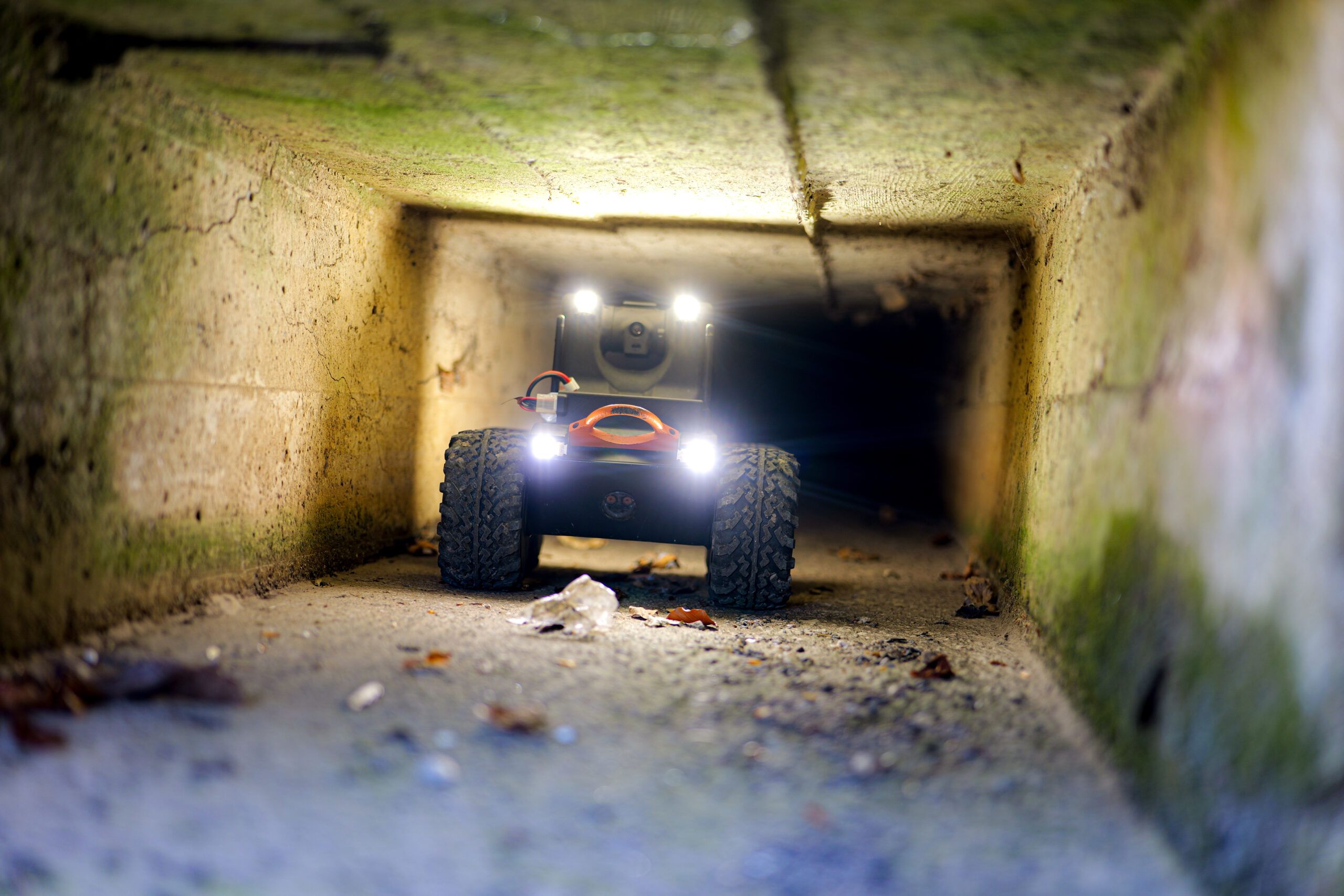
Televised inspection (TVI) has established itself as an essential method for checking the internal condition of pipes without the need for major works. At a time when sewer systems are ageing, when local authorities and industry alike need to optimize their investments, and when regulatory requirements are becoming more stringent, TVI is an indispensable diagnostic tool. Thanks to advances in technology - high-resolution cameras, motorized inspection robots, real-time transmission - solutions such as the Roview2 from Multinnov now provide a fast, accurate and reliable view of pipe interiors, while enhancing operator safety.
Context and inspection requirements
Wastewater systems, whether gravity or pressurized, are subject to many stresses: structural ageing, ground movement, invasive roots, hydraulic overload, corrosion and grease deposits. These phenomena can lead to cracks, deformation, infiltration of parasitic water or partial obstructions, increasing the risk of overflow, pollution or rupture. Traditionally, assessing the condition of a pipe required heavy, sometimes invasive intervention: earthworks, opening of hard-to-reach manholes, manual inspection in confined or unsanitary environments. These operations were costly, time-consuming and could expose teams to significant risks (toxic gases, waterlogging, under-oxygenated atmospheres).
Faced with these challenges, network managers have been looking for safer, more efficient solutions to obtain reliable information before undertaking maintenance operations. ITV has become the benchmark: it makes it possible to observe the inside of pipes without any human intrusion, while providing a complete diagnosis that facilitates decision-making.
In industry and wastewater networks, the need for visual inspection has become even greater with the increase in buried infrastructures, the growing complexity of networks and the need to optimize every intervention to avoid unnecessary costs.
ITV operation and applications
Televisual inspection is based on the use of cameras mounted on inspection robots, capable of moving through pipes even when they are difficult to access. Such equipment, like that offered by Multinnovinclude a number of complementary technologies: all-terrain motorization for use in complex environments, a high-definition steerable camera, powerful lighting, a live transmission system and tools for measuring or geolocating defects.
The principle is simple: the robot is introduced into the pipe through a manhole or access port. The operator pilots the equipment remotely, observes the images in real time and records the entire journey. The video enables the nature, size and location of any anomalies to be pinpointed.
The main applications are as follows:
- Detection of structural defects: longitudinal cracks, ovalization, incipient fractures, subsidence.
- Identification of intrusions: roots, foreign objects, collapsed materials.
- Hydraulic analysis: deposits, sedimentation, counter-slopes, stagnation.
- Post-work inspection: inspection after repair, rehabilitation or lining.
- Preventive diagnostics: monitoring wear and tear of materials, ageing of the network.
- Site preparation: precise location of areas to be repaired to avoid unnecessary earthworks.
ITV fits in perfectly with the technical standards widely used in France, such as NF EN 13508-2 for defect coding. It guarantees a standardized inspection that can be understood by everyone involved: operators, project managers and rehabilitation contractors.
Modern inspection robots, such as the Roview2offer much-appreciated versatility: adaptation to a wide range of pipe diameters, wet environment compatibility, powerful motorization, stability in flooded or congested manholes. Their robust design means they can operate safely in confined spaces, without the need for heavy infrastructure or specialized ventilation systems.
Benefits and prospects for network management
The use of TV inspection robots offers major benefits, both operationally and economically.
Safer operations
One of the most immediate benefits is the drastic reduction in human exposure to risks. Operators no longer need to climb down manholes, enter pipes or handle equipment in potentially hazardous atmospheres. In this way, robotization reduces the risk of accidents due to lack of oxygen, toxic gases, slips or collapses.
More precise diagnosis
High-resolution cameras and on-board robot intelligence enable a level of detail that far exceeds traditional visual inspections. Defects can be identified more precisely and localized, and images can be used to support maintenance decisions. This also enables better budget planning.
Considerable time savings
ITV reduces the need for earthworks, site preparation and team mobilization. Inspections can be carried out quickly, even in hard-to-reach areas. The immediate availability of images speeds up operational decisions.
Overall savings for managers
By detecting faults before they become serious, inspection robots help to avoid major repairs or operating crises. Precise diagnostics mean you can intervene only where necessary.
Towards smarter inspections
Technological perspectives further enhance ITV's effectiveness:
- improved sensors,
- artificial intelligence to pre-analyze defects,
- enhanced real-time transmission,
- greater autonomy for motorized platforms.
These developments make inspection robots like the Roview2 even more efficient and reliable, and pave the way for more predictive network management.
Televised network inspection has become an essential part of modern wastewater infrastructure management. Thanks to high-performance robotized solutions, such as those developed by Multinnovoperators now have a reliable, fast and cost-effective tool for diagnosing the condition of pipes, without the need for invasive work. Reducing human risks, improving diagnostics, optimizing budgets: ITV provides a real strategic advantage for local authorities and industry alike. As technologies progress, these inspections will become even more accurate and efficient, contributing to sustainable, controlled management of underground networks.