In industrial logistics, working at heights is part of everyday life. Whether inspecting structures, checking systems, or verifying equipment, these tasks are essential but expose workers to significant risks.
Falls, human error, difficult access conditions… working at heights remains one of the leading causes of accidents inindustry. Despite strict protocols, these operations often require heavy and costly equipment.
In light of these challenges, the integration of new technologies is becoming essential. inspection drones, developed notably by Multinnov, offer a credible alternative for ensuring operational safety while improving efficiency.
The Risks of Working at Heights
Work at heights is subject to strict regulations, but it remains inherently risky. In industrial settings, several factors exacerbate these risks.
First, accessing high-altitude areas often requires special equipment:
- scaffolding
- aerial work platforms
- ropes or anchoring systems
These systems take time to set up and require significant resources.
Furthermore, working conditions are not always ideal. Operators may face:
- unstable surfaces
- adverse weather conditions
- a lack of visibility
- crowded environments
These constraints increase the risk of accidents, even for experienced teams.
Beyond safety, these operations also have an economic impact. The installation of equipment, production downtime, and the mobilization of personnel generate significant costs.
In this context, reducing the need for human intervention at heights has become a strategic priority for companies.
Drones as a secure solution
The use of drones in industrial logistics drastically reduces the need for work at heights. These tools offer a new, faster, and safer approach tovisual inspection (VI).
Capable of operating in complex environments, drones can access hard-to-reach areas without putting operators at risk.
Practical applications in the field
Drones are now used for a wide range of applications:
- inspection of metal structures
- Roof and structural inspections
- inspection of high-altitude logistics facilities
- monitoring of warehouses and storage areas
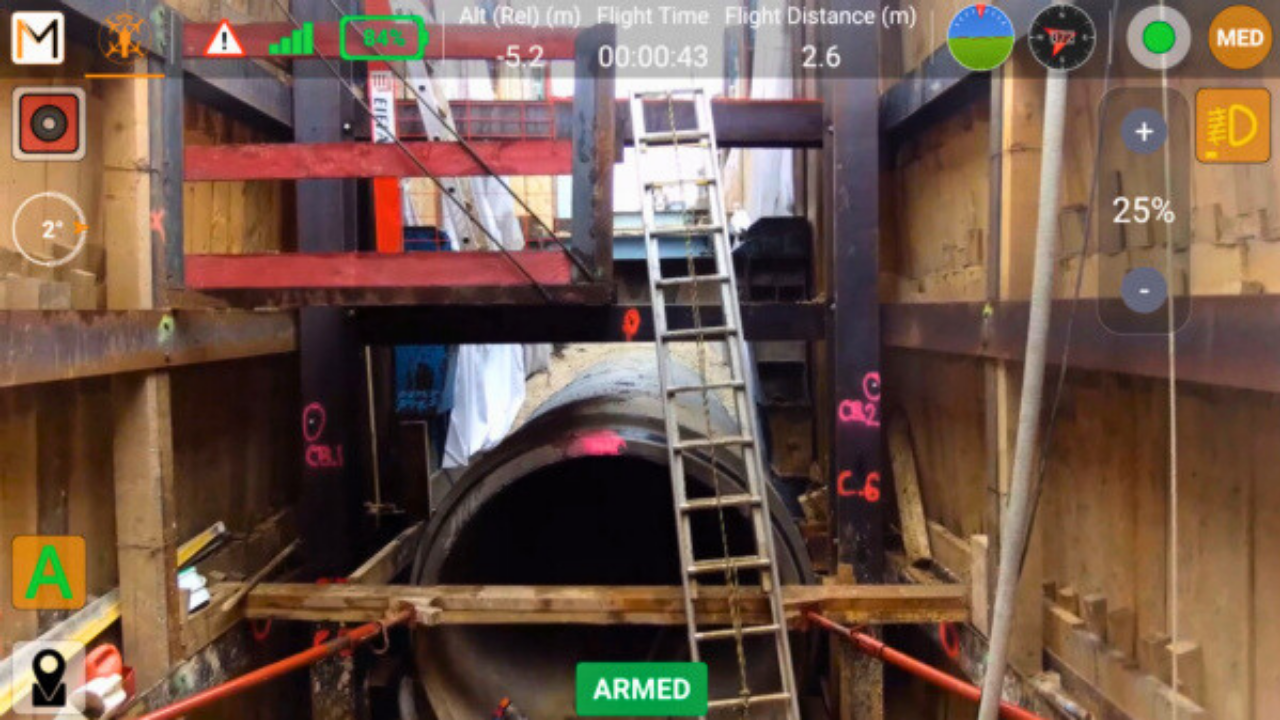
In some cases, they can also operate in confined spaces, where human access is even more limited.
The systems developed by Multinnov incorporate high-performance inspection cameras capable of providing detailed images. This precision allows for the rapid identification of anomalies without direct intervention.
Significantly improved security
One of the main advantages of drones is that they reduce risks to human life.
Operators remain on the ground and manage operations remotely. This allows for:
- to prevent falls
- to limit exposure to hazardous environments
- to ensure that routine inspections are carried out
This development is fully in line with corporate risk prevention policies.
Integration and Operational Benefits
Beyond safety, the integration of drones into logistics processes delivers significant performance gains.
Cost reduction
Drones help reduce the need for heavy equipment. Less scaffolding, fewer aerial work platforms, and less setup time: the savings are immediate.
Indirect costs are also reduced:
- reduction in downtime
- human resources optimization
- more targeted interventions
Operational time savings
Inspections can be carried out quickly, without any complicated preparation. This makes it possible to increase the frequency of inspections and improve preventive maintenance.
Teams become more responsive and can act more quickly when problems arise.
Better use of data
Drones enable the collection of accurate visual data that can be analyzed in real time. This information facilitates:
- structural analysis
- decision-making
- intervention planning
With a view to improvingefficiency, this data helps ensure better infrastructure management.
Gradual integration into industrial processes
The adoption of drones requires an adjustment to working methods. Companies must integrate these tools into their existing industrial processes.
This involves:
- team building
- the implementation of appropriate protocols
- data integration into management systems
Once this phase is complete, the benefits quickly become apparent.
Working at heights remains a major challenge in industrial logistics. Despite preventive measures, the risks persist and the associated costs remain high.
The integration of inspection drones offers a practical solution to these challenges. By reducing the need for human intervention, these technologies improve safety while optimizing operational performance.
Solutions developed by Multinnov perfectly illustrate this trend. By combining innovation, precision, and efficiency, they enable companies to modernize theirvisual inspection practices.
As these technologies become more widely available, their adoption is becoming a strategic asset for industrial players seeking to balance security, performance, and cost control.