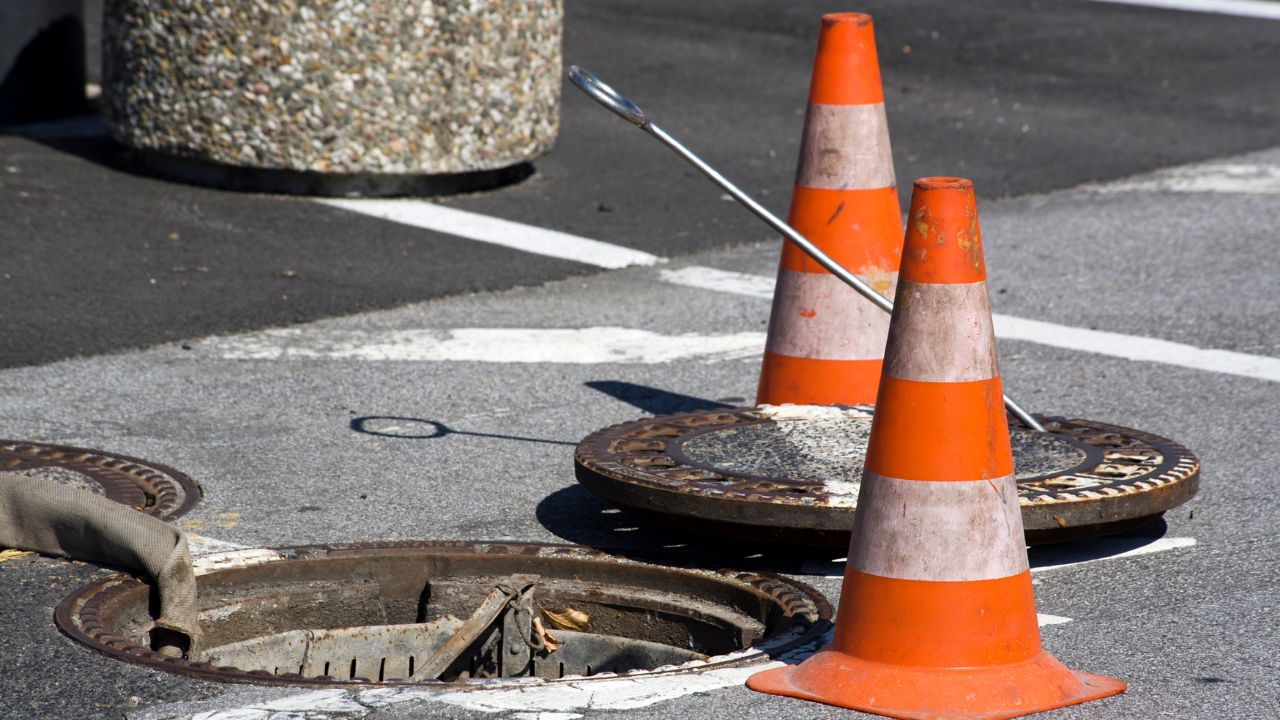
Sewer systems are essential infrastructure for the proper functioning of cities and industrial sites. However, monitoring them remains challenging due to their underground location, their extensive size, and the often difficult access conditions. Cracks, leaks, blockages, or subsidence can develop gradually and cause costly malfunctions if not detected in time.
In response to these challenges, inspection technologies are evolving rapidly. At Multinnov, we develop indoor drone and inspection robot solutions that improvethe visual inspection of networks while enhancing operator safety. Through the use of Stereo3 and Roview3, it is now possible to obtain accurate data on the condition of infrastructure while minimizing human intervention in confined spaces.
Why modernize sewer systems?
The management of sewer systems relies on a precise understanding of the condition of the structures. As infrastructure ages and environmental constraints increase, operators must be able to quickly identify anomalies that could compromise the system’s operation.
Traditional inspection methods, however, have certain limitations. They often require significant logistical resources, operational downtime, or work in environments that pose risks to operators.
Among the most common issues encountered are:
- structural cracks;
- water leaks;
- blockages caused by buildup or roots;
- deformations in the pipes;
- localized subsidence.
Early detection of these defects allows maintenance efforts to be targeted before major damage occurs. This preventive approach helps extend the service life of infrastructure while reducing the costs associated with emergency repairs.
In this context, technologicalinnovation plays a central role in making inspections faster, more reliable, and more accessible.
Drones for Infrastructure Inspection
The use of drones and robotics is gradually transformingCCTV (closed-circuit television) inspection practices in underground networks.
At Multinnov, we have developed two complementary solutions capable of meeting different needs depending on the site conditions.
The Stereo3 is an indoor drone designed to operate in confined environments where human access is difficult or risky. Equipped with optical stabilization based on stereoscopic vision, a camera capable of recording in 4K, and powerful lighting, it enables detailed inspections of complex underground structures. This technology provides precise navigation even in areas without a GPS signal.
The Roview3, on the other hand, is an inspection robot specifically designed for sewer systems and pipelines. Fully waterproof, equipped with a 4K camera, and controlled wirelessly, it allows operators to explore underground infrastructure while transmitting images in real time. Its ability to float also allows it to perform certain inspections in pipes that are partially filled with water.
These solutions offer several operational benefits:
- real-time data collection;
- improved diagnostic accuracy;
- reduction of logistical challenges;
- access to difficult or dangerous areas;
- better traceability of inspections.
Thanks to these tools, operators have access to information they can use immediately to assess the condition of the network and plan the necessary maintenance.
The concrete benefits for local communities and business owners
The adoption of new inspection technologies is not merely a response to a need for innovation. It is part of a comprehensive effort to improve infrastructure performance.
The first benefit relates to safety. Sewer systems are often considered confined spaces that can pose risks related to gases, moisture, or accessibility. By using a drone or a robotic inspection camera, operators can limit their direct exposure to these environments.
The second advantage is increasedefficiency. Inspections can be carried out more quickly, with fewer heavy-duty resources and higher-quality data. This provides technical teams with reliable information to make informed decisions.
Local governments and operators also benefit from more efficient financial management of their infrastructure. Early detection of anomalies makes it possible to plan repairs in advance and avoid particularly costly emergency repairs.
The main benefits observed are:
- reduction in maintenance costs;
- improved diagnostic reliability;
- optimization of work scheduling;
- reduction in service interruptions;
- improved asset management of infrastructure.
Finally, incorporating the collected data into a preventive maintenance strategy helps enhance the sustainability of networks while facilitating compliance with regulatory requirements.
Optimizing sewer systems today requires a better understanding of the infrastructure and the use of technologies tailored to on-site conditions. Thanks to Stereo3 and Roview3, we at Multinnov , we offervisual inspection solutions capable of operating in the most complex environments while improving safety,efficiency, and the quality of diagnostics. The combination of robotics,TVI, and imaging technologies paves the way for smarter, more cost-effective, and more sustainable management of sewer networks.